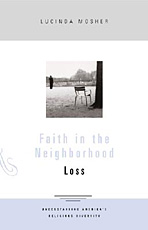
Lucinda Mosher holds a Th.D. from General Theological Seminary and teaches extensively in universities, seminaries, and parishes about world religions and inter-religious relations. In this paperback volume in the Faith in the Neighborhood Series, she focuses on the complex ethical attitudes toward the suffering and loss related to illness and death. The United States, she notes, is a multireligious country, and it is helpful to learn what others think and feel about the issues we face every day in our communities. On these pages you will find how followers of certain Afro-Caribbean and Native American traditions, Buddhists, Hindus, Jains, Jews, Muslims, Sikhs, Zoroastrians, Shinto-followers, Taoists, and members of the Baha'i faith deal with illness, death, grief, and remembrance.
The opening chapter examines the attitudes of various religions towards the body and its relationship to the soul as well as what happens when we die. Mosher then moves on to the following topics:
• When We're Ailing
• Postponing Death, Extending Life
• Transition
• Recovery
One of the most challenging new fields of ministry is spiritual caregiving. "To be able to help people in different religions — it's akin to being multi-lingual," a Buddhist chaplain says. "Cultures are different, words are different, philosophies are different, texts are different. A lot of chaplains go into this work because they want to win souls for their religion. That's absolutely not what being a chaplain is about. It's about being a resource for that person — whether they are Christian, atheist, agnostic, Hindu, Muslim. In Buddhism, we have this idea of stepping out of the limiting 'I' constraint that we impose on ourselves. I try to step outside of my own beliefs, conceptions, desires; I try to have what Buddhists call 'emptiness' — so I can be there one hundred percent for another person. And I believe that's spiritually possible."
Books like Faith in the Neighborhood: Loss by Lucinda Mosher open the door for that kind of presence, sharing, and co-operation. It concludes with a glossary of definitions, a very basic outline of each religion, and recommendations for further reading.