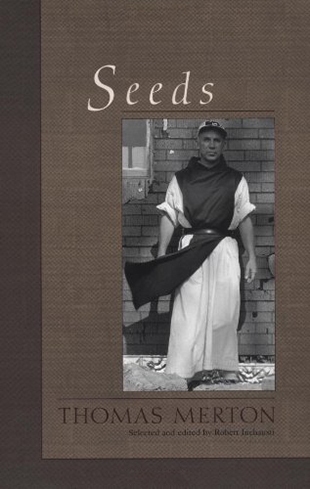
"It is not complicated to lead the spiritual life. But it is difficult. We are blind, and subject to a thousand illusions. We must expect to be making mistakes all the time. We must be content to fall repeatedly and to begin again to try to deny ourselves, for the love of God," wrote Thomas Merton (1915 - 1968), the prolific Trappist monk, contemplative, and social activist. Robert Inchausti, author of Thomas Merton's Spiritual Prophecy, has made this selection from this Christian visionary's writings. The passages are divided into four sections that mirror the different facets of Merton's development: Real and False Selves, The World We Live In, Antidotes to Illusion, and Love in Action. At the end of the introduction, Inchausti concludes: "When we read his works, we have the strange sensation of being both found out and set free. For although he undermines our illusory ambitions, questions our values, and assaults our complacency, he also gives solace to our impoverished souls by reminding us of a larger, more inclusive, transcendent reality of which we are all a part."
The one theme that struck us most forcefully as we were reading these passages is Merton's multidimensional treatment of justice. Under this rubric, he puts his thoughts about "the mental and emotional rubbish" of the media, the violence contained in all aspects of the American culture, the radical nature of non-violence, and the challenge of loving one's enemies (see excerpt). Here are a few of our favorite quotations from Merton.
• "Pay as little attention as you can to the faults of other people. And none at all to their natural defects and eccentricities."
• "We know Him better after our minds
have let Him go.
The Lord travels in all directions at once.
The Lord arrives from all directions at once.
Wherever we are, we find that He has just departed.
Wherever we go, we discover that He has just arrived before us."
• "Lying is the mother of violence."
• "The deepest level of communication is not communication, but communion. It is wordless. It is beyond words, and it is beyond speech, and it is beyond concept. Not that we discover a new unity. We discover an older unity. My dear Brothers, we are already one. But we imagine that we are not. And what we have to recover is our original unity. Whatever we have to be is what we are."