Sign In  |  Register  |  Shopping Cart Shopping Cart  |  RSS Subscribe to RSS Feed  
Spirituality & Practice

Find us on:
 Facebook
 Twitter
 YouTube
Search Reviews
Title:

Director
First Name:

Director
Last Name:

Keywords:

Medium:
Practice:

Tradition:
About the Database

Search our database of more than 3,600 film reviews. We have been discovering spiritual meanings in movies for nearly four decades.
Film Awards

The Most Spiritually Literate Films of:
 
Film Awards

The latest films, special features, teaching scenes, and more.
Sign up here

Film Review

By Frederic and Mary Ann Brussat


Global Spirit
Directed by Stephen Olsson
LINK TV 04/09 10-Part Television Series
Not Rated

Link TV presents Global Spirit, a nationally broadcast, pan-cultural television and web series that explores the spiritual, psychological, and scientific belief systems from around the world that animate our actions. It is also an "internal travel" series that taps into the spiritual, mental, and physical practices that give richness and meaning to our days. Global Spirit not only will present a fascinating and eclectic group of spiritual and scientific teachers but also on location footage of the Turkish Whirling Dervishes, a group of American veterans returning to Vietnam in search for forgiveness, a reconciliation ceremony of fighters in Papua New Guinea, and much more.

The host for Global Spirit is Phil Cousineau, one of S&P's Living Spiritual Teachers who is a prolific author, world traveler, filmmaker; and all-around Renaissance man; he is, in other words, the perfect choice for a host. He recently did a Q&A with Frederic Brussat about his involvement in the series.

The ten-part series begins on April 12 and runs through June 14 on Link TV, which is available on DIRECTV channel 375 and Dish Network channel 9410 and on select cable stations. Each week's program will will also be streamed for free at LinkTV.org/GlobalSpirit. Check the website for more information.

Support for this series has been provided by The Kalliopeia Foundation, The Shei'rah Foundation, The Fetzer Institute, The Attar Supporting Organization, The Compton Foundation, and Dreamcatchers.


PROGRAM PREVIEWS

1. THE SPIRITUAL QUEST
Premieres: Sunday, April 12 at 6:00 pm PT/9:00 pm ET
Rebroadcast: Thur., April 16 at 8:00 pm PT/11 pm ET
Rebroadcast: Fri., April 17 at 12:00 pm PT/3:00 pm ET
Free online starting Sunday, April 12, LinkTV.org/GlobalSpirit

In this first episode of Global Spirit, host Phil Cousineau talks with comparative religion scholar Karen Armstrong and professor of Buddhist studies Robert Thurman about their personal spiritual journeys and their understandings of Christianity and Buddhism. Both guests share their responses to monastic life and the importance of study as the linchpin practice that enriches their lives. Armstrong says her spiritual teachers have been books whereas Thurman has picked up great insights from Tibetan Buddhist teachers. She has had no luck with mediation whereas he sees its value. They both have little respect for faith that is based on intellectual assent to dogma or ideas; they are much more impressed with walking your talk or putting faith into practice in daily life. Armstrong and Thurman agree that compassion is needed in our post-modern world as a means of helping people live together in harmony.

To Continue This Journey:

• See our profile of Karen Armstrong that includes reviews of her books, quotations from her writings, listings of videos, interviews, and other resources at S&P's Living Spiritual Teachers Project.

• See our profile of Robert Thurman that includes reviews of his books, quotations from his writing, lists of videos, interviews, and other resources at S&P's Living Spiritual Teachers Project.

• Read more about Karen Armstrong's Charter of Compassion Project.

• Ponder the main events in your spiritual journey. Think about what spiritual teachers have been most important to you. What ways have you found to practice in your family setting or in what the Hindus have called the household? Try to incarnate compassion for the rest of this week.


2. IN SEARCH OF ECSTASY
Premieres: Sunday, April 19 at 6:00 pm PT/9:00 pm ET
Rebroadcast: Thur., April 23 at 8:00 pm PT/11:00 pm ET
Rebroadcast: Fri, April 24 at 12:00 pm PT/3:00 pm ET
Free online starting Sunday, April 19, at LinkTV.org/GlobalSpirit

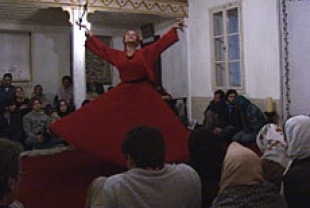
In the second episode of Global Spirit, Phil Cousineau focuses our attention on the ecstatic state which has been a part of all religions and wisdom traditions. There seems to be a universal yearning to escape from the fetters of this world into a transcendent realm outside of ourselves. The host explores this phenomenon with Sobonfu Some, author and teacher of African Spirituality, and Andrew Harvey, the prolific author of many books on spirituality and mysticism. He has also a lively and articulate student of the works and teachings of Jelaluddin Rumi. This expertise comes in handy as Global Spirit presents video footage of a Sufi Zikr ceremony in Turkey where the practice of remembrance animates participants into an ecstatic experience of union with God.

Also featured on the program are scenes of traditional and modern day trance rituals which demonstrate the transformation people seek in dance, trance, and spirit possession. We see Orisha priestesses from Nigeria and Brazil, shaman healers from the Kalahari and Korea, and youth at an all-night techno-rave event in an Australian forest. Some and Harvey share their responses to these diverse examples of ecstatic experience.

To Continue This Journey:

• See our profile of Sobunfu Some that includes reviews of her books, quotations from her writings, listings of videos, interviews, and other resources at S&P's Living Spiritual Teachers Project.

• See our profile of Andrew Harvey that includes reviews of his books, quotations from his writings, listings of videos, interviews, and other resources at S&P's Living Spiritual Teachers Project.

• See a video clip of whirling dervishes in which Sheikh Kabir Helminski of the Mevlevi Order (founded by Rumi) explains the meaning of the Sema ceremony

• An ecstatic experience does not always have to happen in a crowd or in a community where dance and movement are in evidence. We can experience a high just be being totally immersed in our activity or surroundings. Think about such a moment in your life: What did you feel and how did it affect you? Letting yourself go or forgetting yourself is part of ecstasy. Come up with a practice that helps you to do that this week.


3. EARTH WISDOM FOR A WORLD IN CRISIS
Premieres: Sunday April 26 at 6:00 pm PT/9 pm ET
Rebroadcast: Thur., April 30 at 8:00 pm PT/11:00 pm ET
Rebroadcast: Fri., May 1 at 12:00 pm PT/3:00 pm ET
Free online starting Sunday, April 26 at LinkTV.org/GlobalSpirit

In the third episode of Global Spirit, Phil Cousineau leaves San Francisco after visiting a shrine of Sitting Bull and arrives in New York City for a gathering of indigenous peoples from around the world gathered at the United Nations Permanent Forum on Indigenous Issues. As we face a global environmental crisis, it is imperative for governments around the world to hear what tribal leaders, shamans, healers, and other have to say about re-connecting with the earth and seeing ourselves as good stewards of her bounties. Cousineau does interviews with many indigenous activists including Oren Lyons, Marcos Terena, Jake Swamp, Viktor Kaisiepo, Gloria Ushigua, and others among the 3,000 in attendance at the forum.

There are more than 370 million indigenous peoples around the world but for years they have been marginalized and treated as if they were invisible. They possess incredible wisdom about the natural world gleaned from centuries of close attention and nurturance of trees, animals, plants, water and the cycles of the seasons. They have been the caretakers of the earth. Yet even now they are being exploited in many ways which are outlined in the program. At one point Oren Lyons is asked by a Westerner: "What's your bottom-line?" After carefully thinking about it, he responds, "We don't have a bottom line." And that says it all, the difference between those who see everything through their money-making lens and those who refuse to live by such a selfish and short-sighted ethic.

To Continue This Journey:

• Read an Interview with Oren Lyons, Faithkeeper with Bill Moyers.

• Watch the movie Ten Canoes on DVD which looks at the activities of an Australian aboriginal community.

• Read Other Ways of Knowing by John Broomfield which presents an overview of indigenous wisdom.

• See an article about Australia's Backing of UN Declaration of Indigenous Peoples' Rights.

• What books or movies have you seen that have revealed to you the wisdom of indigenous peoples? Answer the question posed to Oren Lyons: "What is your bottom line?" Think about your relationship with the natural world and then come up with a practice that can enrich that relationship throughout the week.


4. FORGIVENESS AND HEALING

Premieres: Sunday, May 3 at 6:00 pm PT/9:00 pm ET
Rebroadcast: Thursday, May 7 at 8:00 pm PT/11:00 pm ET
Rebroadcast : Friday, May 8 at 12:00 pm PT/3:00 pm ET
Free online starting Sunday. May 3 at LinkTV.org/GlobalSpirit

In this very moving installment of Global Spirit, host Phil Cousineau talks with three guests about the challenges of forgiveness in a society where revenge and payback are so predominant. A 1988 Gallup Poll found that 94 percent of people asked said it was important to forgive but 85 percent said that they needed some outside help to do it. Although doctors, therapists, and others have added to our fund of knowledge about forgiveness, it is the world's religions and wisdom traditions which offer the best spiritual guidance on this difficult practice.

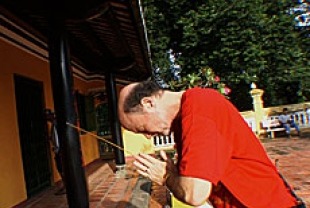
Edward Tick, Founding Director and Senior Clinician of Soldier's Heart, which organizes veterans' return programs, and Kate Dahlstedt, co-director of the same organization, talk with Cousineau and show excerpts of a film about the return of five very traumatized Vietnam veterans to the country where they lost their souls. This program is for soldiers burdened by grief and guilt over their actions during the war who are now seeking forgiveness. Tick and Dahlstedt make a good case for their program which includes rituals, prayers for peace in a Buddhist temple, and visits with Vietnamese people who were their enemies long ago.

Also featured on "Forgiveness and Healing" is Azim Noordin Khamisa who talks about his activism following the shooting death of his 20-year-old son by Tony Hicks, a 14 year old trying to prove himself to members of a gang. Khamisa has teamed up with Tony's grandfather and set up a foundation to proclaim to youth around the world the viability of forgiveness and the failure of revenge and violence to heal the soul.

To Continue This Journey:

• Read our book review of Edward Tick's War and the Soul (2005) and an excerpt from the book.

• Check out the site for the Soldier's Heart to read about Veterans' Return Retreats and other programs

• Read about Tarik Khamisa Foundation: www.tkf.org

• Visit the website for The Campaign for Love and Forgiveness, a project of The Fetzer Institute, which also provided support for Global Spirit.

• Protestant minister and writer Frederick Buechner has written: "When you forgive somebody who has wronged you, you're spared the dismal corrosion of bitterness and wounded pride. For both parties, forgiveness means the freedom again to be at peace inside their own skins and to be glad in each other's presence." The next time you are beaten down or humiliated by someone, try compassion and reconciliation rather than revenge. Keep track of your feelings, especially the sweet release of letting go of the past.


5. BREAKING BOWS AND ARROWS
Premieres: Sunday, May 10 at 6:00 pm PT/9:00 pm ET
Rebroadcast: Thurs., May 14 at 8:00 pm PT/11:00 pm, ET
Rebroadcast: Fri., May 15 at 12:00 pm PT/3:00 pm ET
Free online starting Sunday, May 10, LinkTV.org/GlobalSpirit

The focus of this installment of Global Spirit is a 32-minute film written and directed by Liz Thompson, which won the United Nations Media Peace Award for Best Television for 2002. "Breaking Bows and Arrows" is set on the island of Bougainville in Papua New Guinea which has been rocked by a decade-long civil war resulting in the deaths of 15,000 people. Over a three-year period, men from both sides of the conflict talk and arrange a large reconciliation ceremony in order to liberate themselves from hatred and to heal the broken communities. The warriors share betel nut, break bows and arrows in a gesture of peace, and shake hands. The closing part of the ritual includes burying a large stone as a sign of everyone's desire to end fighting and war.

Francis, one of the participants, decides to take this reconciliation process further by digging up the bones of a tribal chief he murdered during the civil war and returning them to the man's wife and relatives. He desperately wants to be released from the guilt and heaviness that he is carrying, and the wife of the chief is also hopeful of releasing her hatred of the warrior and achieving some inner peace. At the end of the touching ceremony, Francis and the wife of the slain chief share their feelings.

Host Phil Cousineau discusses some of the major themes of this film with Ed Tick, Kate Dahlstedt, and Azim Khamisa who were in the program "Forgiveness and Healing." They talk about the process of forgiveness as it relates to community, ritual, touching, the shedding of weapons, the pain of the broken heart, and the transformation that can come through the tragedies of life.

To Continue This Journey:

• Check out Restorative Justice Online, a resource center that provides timely information and commentary on restorative justice developments.

• Read Rabble- Rouser for Peace: The Authorized Biography of Desmond Tutu by John Allen in which he discusses what happened with The Truth and Reconciliation Commission in South Africa.

• One of the major points of "Breaking Bows and Arrows" is the effectiveness of rituals in serving as a catalyst for forgiveness. Come up with your own personal ritual to spur this process in your own life. One example is given in the "Forgiveness" episode of the Spiritual Literacy DVDs. A couple devise a ritual for the end of their relationship that allows them to forgive themselves for their shortcomings. See this on YouTube.


6. MUSIC, SOUND AND THE SACRED

Premieres: Sunday, May 17 at 6:00 pm PT/9:00 pm ET
Rebroadcast: Thurs., May 21 at 8:00 pm PT/11:00 pm, ET
Rebroadcast: Fri., May 22 at 12:00 pm PT/3:00 pm ET
Free online starting Sunday, May 17, LinkTV.org/GlobalSpirit

Host Phil Cousineau states that music has been called "the doorway to the soul." All the wisdom traditions have kept a special place for making music and singing since these activities create community and take us to places that words cannot.

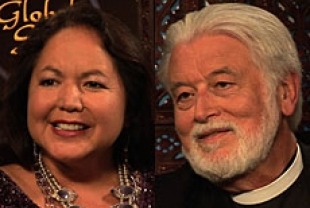
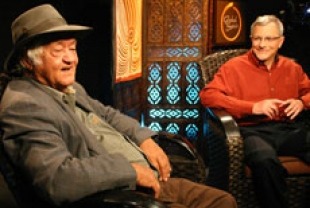
This installment of Global Spirit explores the many different dimensions of sacred music with guests Joanne Shenandoah, a Grammy-award-winning singer and member of the Native American Onondaga tribe, and the Rev. Alan Jones, Dean of Grace Cathedral in San Francisco and author of many books on the Christian faith. She sings two beautiful songs accompanied by her daughter, and there are two liturgical musical performances by the Grace Cathedral Choir. Also included is a seven-minute clip from Peter Brook's film Meetings With Remarkable Men to illustrate the way sound and silence fit together as indicators of the presence of spirit.

Jones talks about how music can affirm and lift up many qualities that are not prized as top virtues in our society such as beauty, transcendence, community, healing of the heart, imagination, and being present. Joanne Shenandoah explains how her tribe has songs for each and every stage and experience in life. Songs weave life experiences together and they are powerful parts of a variety of ceremonies. She shares what happens to her when she sings or composes songs and the various ways in which sacred music is indeed a universal language of spiritual yearning, hope, and love.

To Continue This Journey:

• See our profile of Alan Jones that includes reviews of his books, quotations from his writings, listings of videos, interviews, and other resources at S&P's Living Spiritual Teachers Project.

• Read our Review of the film Meetings With Remarkable Men

• Explore your own views of sacred music. Name your three favorite spiritual singers or musicians. In what ways do you rely upon sacred music as a spur to inner peace, living in the present moment, being grateful, honoring beauty, and being transported into ecstasy? What is the role of sacred music in your religious community? What is your attitude toward silence and the spiritual gifts it can give to you?


7. FROM THE HEART OF THE WORLD: THE ELDER BROTHERS' WARNING

Premieres: Sunday, May 24 at 6:00 pm PT/9:00 pm ET
Rebroadcast: Thurs., May 28 at 8:00 pm PT/11:00 pm, ET
Rebroadcast: Fri., May 29 at 12:00 pm PT/3:00 pm ET
Free online starting Sunday, April 12, LinkTV.org/GlobalSpirit

Host Phil Cousineau is convinced that in these times of climate change and drastic environmental problems, indigenous peoples have wisdom to offer us based on their closeness to nature and their survival skills.

This installment of Global Spirit revolves around a 1991 documentary From the Heart of the World: The Elder Brothers' Warning directed by Alan Ereira. He offers some commentary as well. This BBC filmmaker went to visit the Kogi, a tribe living in the Sierra Nevada mountains of northern Columbia in the same way their ancestors did before the Europeans came. They see themselves as guardians of life on Earth and are governed by priests called "mamas." The Kogi refer to themselves as The Elder Brothers. They are anxious because we, the Younger Brothers, have mangled and damaged the earth through industrial exploitation, mining, and clearing of forests. Unless we change our ways, they say, the world will end: "If we act well, the world can go on."

Eighteen years ago, this documentary provided a wake-up call for the Western world and its belief in progress. Now it is more relevant than ever.

To Continue This Journey:

• See our 1991 review of From the Heart of the World: The Elder Brothers' Warning

• Read our review of the book The Elder Brothers: A Lost South American People and Their Message About the Fate of the Earth by Alan Ereira

• Read an account of a visit to the Kogi today by two Sufis, Kabir and Camille Helminski

• Share your responses to the Kogi and their understanding of the natural world. What did you find most interesting about their way of life? What do you think lies behind their deep respect for the Earth and its manifold mysteries? What lies behind our domineering view of the Earth? What personal steps can you take on a daily basis that would lessen the chance of an environmental catastrophe the Kogi say we are creating?


8. ART AND THE CREATIVE SPIRIT

Premieres: Sunday, May 31 at 6:00 pm PT/9:00 pm ET
Rebroadcast: Thurs., June 4 at 8:00 pm PT/11:00 pm, ET
Rebroadcast: Fri., June 5 at 12:00 pm PT/3:00 pm ET

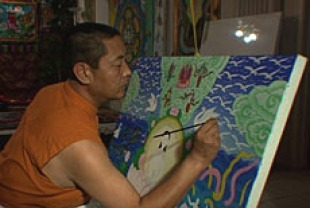
In most spiritual traditions respect is given to creativity: it is called sacred art or spiritual art. On this program, host Phil Cousineau talks with two very different artists: Pueblo Indian sculptor Estella Loretto from Santa Fe and Tibetan Buddhist Lama Lhanang Rinpoche from Los Angeles. There are segments in the studio where they share ideas and segments in their studios where they discuss the meaning of their artistic creations

Estelle Loretto begins the show by lighting two candles, and Lama Lhanang offers a prayer. They then respond to the question as to whether or not everyone is creative. In his studio, the Buddhist painter describes one of his works depicting birds and dolphins. He sees the ladder as a symbol of the free spirit. Estelle Loretto comments on what it's like to sculpt in clay and what she enjoys about working in this medium.

Both artists point out how important it is to communicate to people that the present moment is the best place to be. As creative people, they believe in change and emphasize that we should be less attached to people, ideas, and behaviors. Lama Lhanang stresses that letting go is part of the creative process as is accepting the impermanence of life. Estelle Loretto focuses on the energy in her sculptures and the power of positive thinking in her creativity.

The two artists end the program with a mutual recognition that Native Americans and Tibetans feel so at ease with each other that they consider themselves members of the same family.

To Continue This Journey

• "Art," said Sir Kenneth Clark, "must do something more than give pleasure; it should relate to our own life so as to increase our energy of spirit." What role does art play in your life?

• What is the place and importance of art in your spiritual tradition?

• What is your response to the question: Is everyone an artist?

• Both of these artists have learned to listen to the language of a larger life as it lives through them. What new insights have they given you into attachment, freedom, letting go, impermanence, peace, and living in the moment?

• Discuss with a friend this assertion by Sister Wendy Beckett: "All art that really draws us to look at it deeply is spiritual."


9. RUMI: POET OF THE HEART

Premieres: Sunday, June 7 at 6:00 pm PT/9:00 pm ET
Rebroadcast: Thursday, June 11 at 8:00 pm PT/11:00 pm, ET
Rebroadcast: Fri., June 12 at 12:00 pm PT/3:00 pm ET
(Not available online)

For seven centuries the spiritual poetry of Jelaluddin Rumi (1207-1273) has enchanted, inspired , and delighted people of all religious traditions. In this episode of Global Spirit, host Phil Cousineau talks with Haydn Reiss whose documentary Rumi: Poet of the Heart is then shown in its entirety.

In the film, narrator Debra Winger begins with a brief profile of Rumi who was born in Afghanistan and moved to Turkey when his father became the head of a Sufi learning community. After his father's death, this gifted young man took over for him until his life was transformed by Shams of Tabrizs, a mysterious itinerant dervish. The result: a profound and prolific poet whose devotion to the Beloved resulted in the creation of the Whirling Dervish dance tradition.

Coleman Barks, who as done the most to popularize Rumi with his translations, reads selections from the Sufi seer's poetry. Huston Smith gives some interesting background on the whirling dervishes. Robert Bly and Michael Meade recite Rumi poems and comment on them. And Deepak Chopra probes this Sufi mystic's great contribution to our understanding of the spiritual dimensions of love. Rumi: Poet of the Heart beautifully conveys the fragrance of his art and his soul.

To Continue This Journey

• How do you explain the continuing popularity of this thirteenth-century poet?

• What is your favorite poem recited by Coleman Barks? Why does it appeal to you? Read more of Barks' translations of Rumi in excerpts from his books.

• Sufism is often called a path of heart. How does this theme come across in this film?

• Sign up for our e-course Practicing Spirituality with Rumi consisting of 40 emails with poems by Rumi and practice suggestions based on them. It is available on demand so you can choose your own start date and frequency.

10. THE JOURNEY TOWARDS ONENESS

Premieres: Sunday, June 14 at 6:00 pm PT/9:00 pm ET
Rebroadcast: Thursday, June 18 at 8:00 pm PT/11:00 pm, ET
Rebroadcast: Fri., June 19 at 12:00 pm PT/3:00 pm ET


Free online starting Sunday, June 14 at LinkTV.org/GlobalSpirit

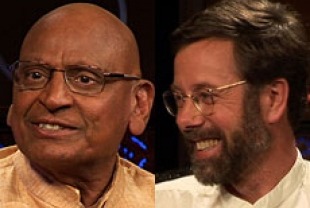
On this the last program in the Global Spirit series, host Phil Cousineau talks with physicist Dr. Ravi Ravindra, a Hindu who is beholden to Krishnamurti and the teachings of Gurdjieff, and with Llewellyn Vaughan-Lee, a Naqshbandi Sufi teacher and Jungian analyst. The subject under examination is unity which is seen by these two as a process, a quality, and a way of being. At this point in history, scientists and believers from many different religious traditions are agreeing that all of life is interconnected. Separateness from people, places, and things is an illusion.

Ravindra and Vaughan-Lee observe that heightened unity consciousness often comes through mystical experiences: both men share theirs with us. Cousineau asks them what obstacles get in the way of Oneness and they concur that selfishness is a major stumbling block. Stepping aside and receiving grace is a fruitful approach in the quest for unity.

Their discussion of this elusive process is enhanced by three video clips. The first is an incredibly moving interview with an Australian aboriginal who talks about the harmony in his life thanks to his connectedness to the land, plants, animals, and other human beings. Then a Catholic archbishop in Ecuador salutes the unity of the religions and the need for people of faith to work together instead of emphasizing their differences. A Tibetan Buddhist at a monastery suggests that people need to reconnect with the world as a spiritual practice. This journey to Oneness will open many doors for viewers.

To Continue This Journey

• See our profile of Llewellyn Vaughan-Lee that includes reviews of his books, quotations from his writings, listings of videos, interviews, and other resources in the Living Spiritual Teachers Project.

• Read our review of Ravi Ravindra's book Christ the Yogi: A Hindu Reflection on the Gospel of John

• There is a line in the Bhagavad Gita which says: "They live in wisdom who see themselves in all and all in them." Spend a day thinking about and celebrating your intimate connections with nature, other people, and even inanimate objects.

• Try using the following breath prayer several times during the day and see how it heightens your feeling of Oneness:

Breathing in: I am one with all . . .
Breathing out: I am that.


Films Now Showing
Recent VHS/DVD Releases

Reviews and database copyright © 1970 – 2009
by Frederic and Mary Ann Brussat
Whirling Dervish in In Search of Ecstasy Sobonfu Some and Andrew Harvey in In Search of EcstasyEd Tick returning to Vietnam Forgiveness and Healing Joanne Shenandoah and Alan Jones in Music, Sound and the Sacred Lhanang Rinpoche in Art and the Creative Spirit Ravi ravindra and Llewellyn Vaughan-Lee in The Journey Towards Oneness
Related Content

• Read an Interview with Phil Cousineau about Global Spirit