Practices Search Results
The Boston Globe reports on the devastation in Brazil in mid-January 2011: "Last week, a series of flash floods and mudslides struck the Serrana mountain region near Rio de Janeiro, Brazil, destroying buildings roads and more. Nearly 14,000 people are now homeless, 759 are reported to have been killed and another 400 remain missing in this, Brazil's worst-ever natural disaster. As soldiers make their way to remote towns with aid and transportation, Brazil's government has said it would accelerate efforts to build up a nationwide disaster-prevention and early-warning system.
A massive 8.9 magnitude earthquake hit the Pacific Ocean nearby Northeastern Japan at around 2:46 pm on March 11 (JST) causing damage with blackouts, fires, building collapses, and much more. The nuclear power plant at Fukushima Dai-ichi was damaged, raising concerns about leaking radiation. The earthquake triggered an enormous tsunami that roared over Japanese harbors, towns, and fields, destroying much in its path. The tsunami waves crossed the Pacific region as far as California in the United States. The death toll in human and animal life is still being determined.
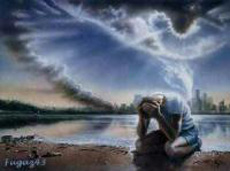 Through searches for "Japanese earthquake" on Google Images and YouTube, we see so many scenes of the destruction. We find ourselves empathizing with those affected by this tragedy. We have compassion for the suffering.
 On January 8, 2011, Gabrielle Giffords, a Democratic member of the U.S. Congress, was shot in the head outside a grocery store in Tucson, Arizona, while holding a public event. Six other people at the gathering, including a judge and a nine-year-old girl, were killed by the shooter.
The United Nations refugee agency says almost 100,000 people have fled the fighting in Libya and gone to Tunisia and Egypt. The situation is now seen as a "humanitarian emergency." Many of these people are poor contract workers carrying what they could grab as they left.
 Discovery.com reports that the United Nations is urging international efforts to save bee colonies which are in serious decline, especially in the industrialized northern hemisphere. Among the reasons for this scary situation are pesticides, air pollution, mismanagement of the countryside, and the loss of flowering plants. UNEP director Achim Steiner notes that of the 100 crop species that provide 90 percent of the world's food, over 70 percent are pollinated by bees.
Libyan leader Muammar Gaddafi is killing his own people. There are estimates that as many as 2000 protesters on the streets have lost their lives. Mercenaries with machine guns are shooting down people at random.
All Seeing One, we are so grateful for the largely ignored and unheralded services of millions of people who work aboard the cargo ships that bring us our food, clothes, and other goods we use every day.
Review: In his review of Rose George's book Ninety Percent of Everything: Inside Shipping, the Invisible Industry That Puts Clothes on Your Back, Gas in Your Car, and Food on Your Plate, Dwight Garner writes about the large container ships that are staffed mainly by Filipinos who speak good English and are paid low wages. Global shipping doesn't often make the news but we are given a glimpse of this world in three recent movies: Captain Phillips, A Hijacking, and All is Lost. Two thousand seafarers die each year, and they also face the dangers of hijacking by sea pirates. (The New York Times) O Gracious Captain, may cargo ship crews find fulfillment in their work and be safe on their voyages.
Mother of Mercy, we have learned about people known as canners and their struggle for survival.
Documentary Film: Canners are people who survive by redeeming bottles and cans they collect from curbs, garbage cans, and apartment complexes. Many of these women and men are the working poor who earn five cents per can. (HBO Oscar-nominated documentary Redemption about canners in New York City) O Protector of the Poor, watch over and sustain this army of people who remain invisible to far too many of us.
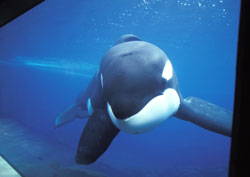 Lord of Life and Protector of Animals, watch over and take care of all whales in captivity whose ancestors roamed freely in thousands of miles of ocean.
Fact: 52 Orcas are now living in captivity and many of them are exploited in marine park shows for the public and then confined at night to dark concrete pens. (Orcas in Captivity Web Site)
On June 24, 2011, New York, home to 42,000 same-sex couples, became the sixth and by far the largest state to legalize same-sex marriage. This means the number of same-sex couples living in states allowing same-sex marriage has more than doubled overnight. In a Reuters release, Columbia Law School professor Suzanne Goldberg noted: "New Yorkers tend to move about the country quite a lot. High numbers of same-sex couples likely to marry here will increase pressure on other states to treat those couples fairly." We rejoice in this legal breakthrough for loving couples in New York.