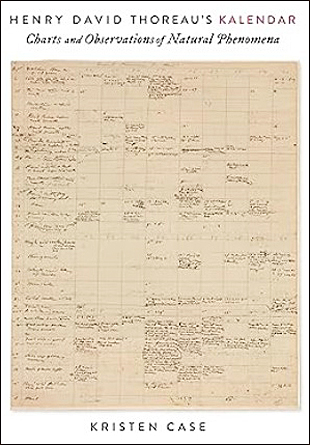
“The innovation represented by the charts of general phenomena, which Thoreau developed in 1860, had to do with the variety of phenomena observed — and with the inclusion of his own habits of seasonal behavior within their scope. This inclusion marked a significant shift, not only because it provided Thoreau with the synthetic, comprehensive seasonal view that he sought, but also because it reflected his epistemology: the idea that what mattered was not the distantly observed, objective ‘fact,’ but the fact in relation to other facts — including those pertaining to its human observer.”
Henry David Thoreau’s Kalendar Charts and Observations of Natural Phenomena
Look more closely at how you relate to what’s around you.