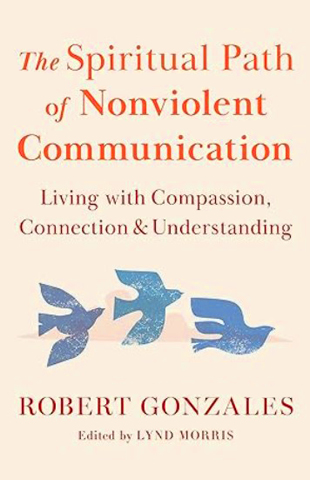
This book seems timely, as studies show that we are more divided from one another, over seemingly intractable differences of opinion, than ever before in modern history.
Author Robert Gonzales taught nonviolent communication — which he and others have turned into an acronym, NVC — for decades. He died in 2021 and an editor pulled together this book from a variety of materials, including transcribed recordings, left behind from Gonzales’ teaching. “Transforming conflict into connection” is a primary goal of this practice.
An “NVC Dialogue” is described as a communication with four tasks whereby we learn to (1) “Make observations instead of evaluations or judgments”; (2) “Identify the feelings that are present, being careful not to confuse these with beliefs or interpretations”; (3) “Guess which life-serving needs might be giving rise to the feelings arising in yourself or the other person before even considering strategies to meet those needs”; and (4) “Make requests of yourself or someone else to ensure the feelings and needs that were expressed have been understood.”
Gonzales also emphasizes how this practice — or series of practices — of nonviolent, healthy communication that breaks down barriers between people, is also a “doorway to spirituality.” This begins to happen as we “shift from the common mindsets of judgment, blame, and criticism that are at the root of suffering, toward authentic honestly and empathetic connection with self and others.” And this led Gonzales to also become a practitioner and teacher of what he called “Living Compassion” — a daily practice that he explains using five core principles.
There are dozens of other spiritual practices at work here as well. These include “Holding our longings passionately, but lightly”; “Connecting feelings — even anger — to needs”; “Bringing self-compassion to our reactivity”; and a way of gratitude that is borne from personal pain and suffering (see the excerpt accompanying this review).
This is a recommended resource for leaders in organizations where conflict easily arises, for counselors who work with people who need compassion, and for just about everyone else, as well.