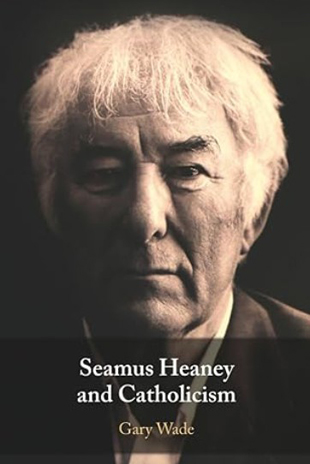
A book devoted to exploring the matters of faith, hope, and forgiveness in the writing of the greatest English-language poet of the last half-century deserves our review. Gary Wade presents a compelling case for the ongoing presence and relevance of the Catholic imagination in the work of Seamus Heaney — long after Heaney ceased to be a participant in Roman Catholic institutional or sacramental life.
Heaney was born in rural County Londonderry in 1939, was awarded the 1995 Nobel Prize for Literature and died in 2013. Author Gary Wade begins in Heaney’s childhood in Northern Ireland, then moves through the writing and themes of each of the poetry collections that gradually made him famous around the world.
Not only is Catholic life and practice found in Heaney’s poems through memory of a devout childhood and youth, but in his ways of adult examination of conscience and forthright engagement with political situations that his poems often address.
Other aspects of religion in the great poet’s work include “the sense of poetic uplift and the attention to absence,” which the critic shows to both be in abundance, and its own form of religious understanding. Long after Heaney ceased to attend regular mass, his Catholic practices of vision, attention, faith, and hope continued.
This is a scholarly book written by a professor of literature and theology, educated in Ireland, now teaching in Australia. It is published by an academic press. But it deserves a readership beyond the university, appealing to fans of Heaney’s work and anyone interested in both classic literature and the ongoing relevance of religion as formator of the human imagination.
Wade shows how religion often pulses in great art long after it ceases to be spoken or openly practiced by its artists. He also shows that some artists engage with an inherited faith in ways that are too complex to leave to the categories of belief and unbelief.