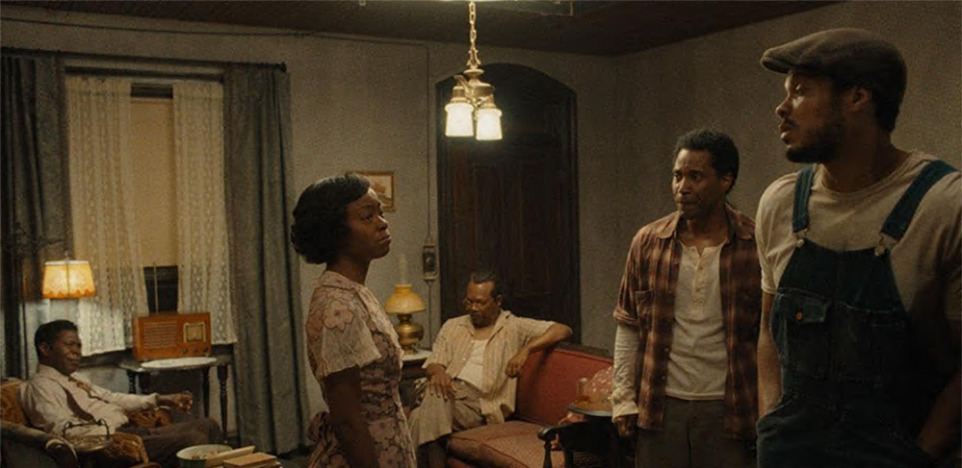
The Piano Lesson is a rousing screen version of August Wilson’s Pulitzer Prize-winning play. It is set in 1936 Pittsburgh, during the aftermath of the Great Depression. John David Washington plays Boy Willie, who has come up from the South to convince his sister, Berniece (Danielle Deadwyler), to sell the family’s piano so that he can purchase some Mississippi farm land their family once worked as slaves. The piano is covered with carvings of their family made by an enslaved ancestor. Berniece refuses to consider selling this heirloom.
Witnessing the conflict between the siblings is Doaker (Samuel L. Jackson), their uncle who has his own history with the piano; Lymon (Ray Fisher), Boy Willie’s shy best friend who plans to stay in the North; Avery (Corey Hawkins), a preacher who is courting Berniece and wants her to let go of the past; Wining Boy (Michael Potts), Doaker’s brother who takes to drink when he can’t deal with the past and what he’s become; and Maretha (Skylar Aleece Smith), Berniece’s 11-year-old daughter. Also present, through scenes of magical realism, is the ghost of James Sutter, the recently deceased landowner who owned the family as slaves. Berniece is convinced that Willie Boy has pushed him down a well.
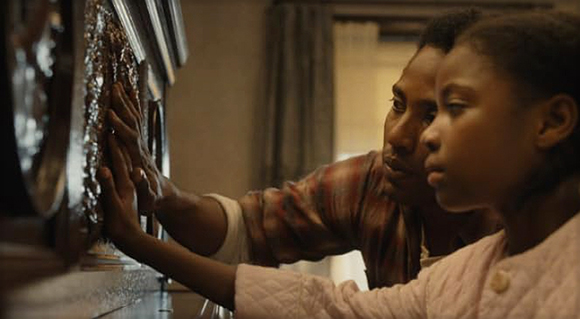
All these characters have different opinions and relationships with the piano. “Things have their within,” wrote French priest and paleontologist Pierre Teilhard de Chardin. And African-American biologist George Wasington Carver said, “If you love it enough, anything will talk with you.” Both qualities are true of the heirloom piano. It hosts the family’s struggles and legacies. Their ancestors speak through it, reminding them of the stories that have defined the family. For Berniece, this is reason enough to cherish it, even though for reasons of her own, she does not play it.
For Boy Willie, the piano is a path to the future. With the money he could get from selling it, he can purchase some of Sutter’s land, thus reversing the trajectory of his family’s place in Mississippi. In a scene reliving the past and affirming their aspirations for the future, the men in the household sing together as the slaves might have sung in the fields. Except this time, the song is one of defiance and affirmation of their now strong community. Song has value.
The conflict over the piano reveals a universal struggle between honoring the past and seeking progress from it. Its lesson, born out in the dramatic ending, is that only by embracing both the past and possible futures can this family achieve true healing.
GOING DEEPER
The Piano Lesson can be a good starting point for your own exploration of how things connect you with your past, your legacy, as well as point you in new directions for the future.
l. What thing(s) punctuate key moments in your life and/or the life of your family? What do they remind you of?
2. What are a few of your prized possessions that were handmade for you, given to you by someone else, or once belonged to another person? Identify any special feelings they elicit. What things do you want people to have as remembrances of you?
3. What do your things say about you to others? What things have you recently dispensed with, or could easily give away, because they no longer reflect either you or your interests? What things are part and parcel of the current you?
4. Which of your possessions have you named? How did you choose each name? How else do you pay respect to the things in your life?
5. Find or make an object to use as an aid during meditation or ceremonies. The wisdom traditions suggest many possibilities: candles, beads, flags, stones, fetishes.
6. Create a welcoming ritual for a new possession, beginning with a blessing prayer. Express your understanding of the special gifts this thing now brings into your life. Some people may want to speak on behalf of other things in your household, welcoming them to their community. Then all vow to honor and cherish this new companion.