“The determined human pattern of pilgrimage points to the basic human need to make a connection with something outside themselves, some holiness or value which helps ground the pilgrim in a new being, in a new lease on life, in something which gives meaning and direction and which is frequently experienced as healing.”
— Jean D. and Wallace Clift in The Archetype of Pilgrimage
People go on pilgrimages for lots of reasons. Some want to experience the atmosphere of a sacred space. Others want to pay homage to a saint or a revered leader. Some want to return to a beloved place or explore their roots. Often the impetus is a desire for absolution.
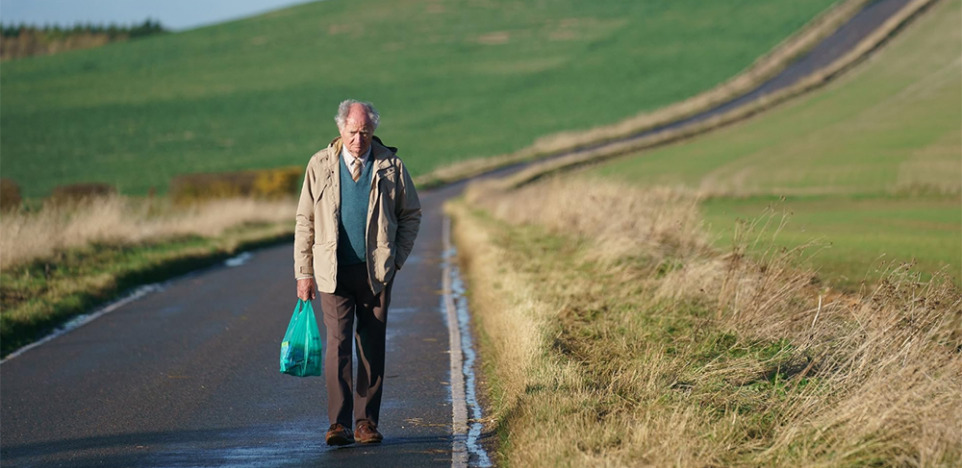
Harold Fry (Jim Broadbent) is recently retired and rather bored. Then one day he receives a letter from a former work colleague, Queenie (Linda Bassett), informing him that she is dying of cancer and is in hospice. He writes her a quick note and, although he wishes he could have expressed himself better, he heads out to mail it at the Post Office. On the way he stops at a convenience store and tells the clerk about Queenie. She says that when her aunt was dying, she gave her hope by visiting her.
This gives Harold an idea. He phones the hospice and asks the staff to tell Queenie he is going to come see her – and he will walk to get there: “I’ll keep walking and she must keep living.” Given that he lives the length of England away, this is an unlikely promise. Still, with no walking shoes, no phone, and only a few snacks, he sets out to walk 450 miles.

From a pay phone, Harold calls his wife Maureen (Penelope Wilton) and tells her he is going to save Queenie. This makes no sense to Maureen. She and Harold have not been particularly close since their son died. Now she fears he is leaving her.
Others are more enthusiastic about Harold’s mission. When the media publicize his walk, a whole crowd comes to walk with him. They get gifts of food and have special t-shirts made. “Harold Fry, he’s our guy,” they chant. Although Harold appreciates the company sometimes, the walk is bringing up memories and feelings that he had not expected.
A walk can do that. In Walking in This World, Julia Cameron shares: “As we stretch our legs, we stretch our minds and our souls. St. Augustine, himself a great walker, remarked: ‘Solvitur ambulando; it is solved by walking.’ “ We’ve leave it to you to discover all the different things that are solved by Harold’s walking.