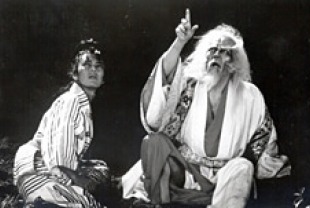
In his 27th film, which is set in 16th-century Japan, Akira Kurosawa has adapted Shakespeare's King Lear. The mighty and elderly Lord Hidetora decides to hand over his kingdom to his sons — Taro, Jiro, and Saburo. When the youngest criticizes his father for the folly of the plan, the warlord banishes him. Soon Lord Hidetora finds himself humiliated and eventually scorned by Taro and Jiro.
Kurosawa, the great master of Japanese cinema (Rashomon, Seven Samurai, Yojimbo), extracts the essence of Shakespeare's drama in this study of filial conflict, the lust for power, and the trauma of old age. There is an autumnal mood in Ran (the title means chaos or disorder) that complements the director's view of the fragility of life and the fatalism that permeates human affairs.
Tatsuya Nakadai's performance as Lord Hidetora is moving in parts. A transvestite actor called Peter brings vitality and pathos to his role as the Fool. But the best acting in Ran is by Mieko Harada as Lady Kaede, Taro's power-hungry and vengeful wife — a true man-devouring seductress.
Ran is a visually luxurious film as it moves from crystalline images of nature to the refined interiors of stately castles. There is a terrible beauty in the battle sequences where tides of charging warriors, followed by foot soldiers, savagely clash. This very stylized movie provides a fitting conclusion to Kurosawa's stunning career.