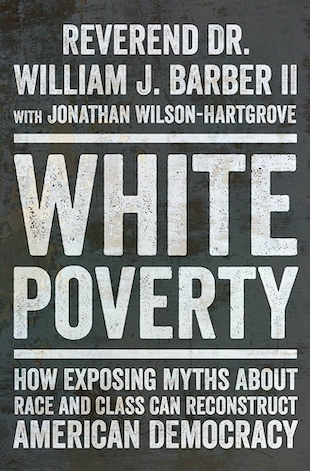
“If we listen to white poverty's wounds, they tell us that silencing the voices of people who are hurting is detrimental to social health for all of us. I know from experience that the old myths hide the impacts of America's exceptional inequality from many of us by hiding white poverty. When I first asked researchers who were helping us with the Poor People's Campaign to disaggregate the numbers of poor Americans by race, they were hesitant. Many of them good white liberals, they were always careful to emphasize the disproportionate impact of poverty on Black, Hispanic, Asian, and Native American communities. ‘If we disaggregate the numbers,’ one of them said to me, ‘they'll show that the largest group of poor and low-income Americans are white people.’
“‘And that's the point,’ I said. The old myths are tricky, and they can catch any of us in their trap. Yes, it's racist to pass policies that we know will harm Black people. At the same time, it is also racist to ignore the ways those same policies hurt poor white people – because racism’s myths are designed to keep Black and white people segregated so they cannot come together to transform a system that doesn't serve most of us. If we're going to be anti-racist and reconstruct an America for all of us, we can't ignore this reality. We have to face the facts that emerge when we pay attention to white poverty's wounds and learn to make the connections between living wages, union rights, and voting rights.”