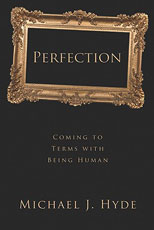
The prize-winning author and rhetorician Michael J. Hyde defines perfection as "a state of completeness in our lives whereby, at least for the moment, we feel secure, comfortable, and at home with ourselves, others, and our immediate surroundings." This erudite book contains a multidimensional examination of the desire for perfection as it appears in philosophy, religion, science, and art. Hyde includes insights into the ideas on this subject of a a wide-ranging group including St. Augustine, Leonardo da Vinci, David Hume, Kenneth Burke, and Mary Shelley.
Many feel that the yearning for perfection can be a spur to achievement while others emphasize that it lays heavy burdens on those who want it too much. Those who seek it are aided by an open mind and a capacity for patience. "Perfection," according to Hyde, "in the truest and holiest sense of the word leads not toward the self but toward the other."
In successive chapters on reason, beauty, and the lived body Hyde assesses their relationships with the ideal of perfection. He spends quite a bit of time examining the "good death" versus "good life" debate in the Terri Shiavo case. He definitely enjoys mining the nuances of the human quest to come to terms with perfection in the movie As Good as It Gets. Hyde succeeds in edifying us about "a state of being that has much to do with all that is good and bad about human existence and that thereby warrants our careful and undying attention."