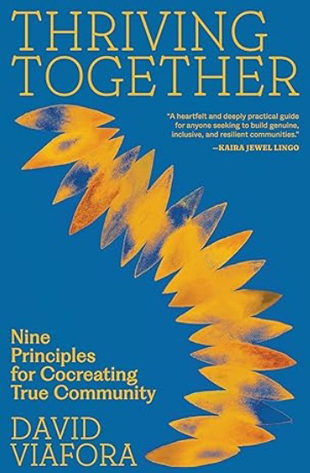
Author David Viafora, who was ordained by Thich Nhat Hanh and spent years practicing with him, believes that we have great need for community. We need the guidance, motivation, and relational support that arise only in a community of people who support and sometimes challenge each other. As he writes in his Introduction, “In the shadow of our societal loneliness and separation, the wisdom of community lies dormant within us like ancient seed buried deep in the earth, waiting for a strong rain to burst them open again.”
Striking are the examples Viafora gives from thriving communities around the world featured throughout his chapters. These include, in the United States, Blue Cliff Monastery in Pine Bush, New York; Deer Park Monastery of Escondido, California; Greatwoods Zen in Charlotte, North Carolina; Morning Sun Mindfulness Community in New Hampshire; Mountain Lamp Community near Deming, in the state of Washington; and then three more in California: Riverside Smiling Sangha in Riverside, Sugarplum Sangha in Ukiah, and World Beat Sangha in San Diego.
Chapter 13, “The Power of Racial Affinity Circles” left me yearning for when I used to have daily heart-to-heart conversations with others, before the pandemic and its shutdowns that changed how we live still today. Always in the sanghas discussed by Viafora, mindfulness practices are a foundation to keep communities together. In this chapter he writes: “Mindfulness helps develop stability, clarity, and compassion so we can sit with the pain of our racial distress, thereby transforming our relationship to it.”
Earlier chapters focus on other aspects of communal practice that bind Buddhists together, and can help and inform other communities as well. These include “Sharing Service” (chapter 4), “Sharing Silence” (chapter 6), and “Sharing Conflict and Reconciliation” (chapter 9).
“Beginning Anew with Oneself” (chapter 10) will also be helpful to many people who are a point in life when they need to evaluate why they left behind a particular community. (See the excerpt accompanying this review.)
The message of this book is universal, told through an abundance of Buddhist teachings and examples. In the final paragraph, Viafora writes: “In true community, we don’t have to face the difficulties of our world alone. As my teacher, Thay, frequently and enthusiastically encouraged, 'Let us climb the hill of the next century, not as separate individuals, but as a Sangha.' Because I have a strong, loving community both at my back and in my heart, I feel ready and excited for whatever challenges and happinesses lie ahead.”