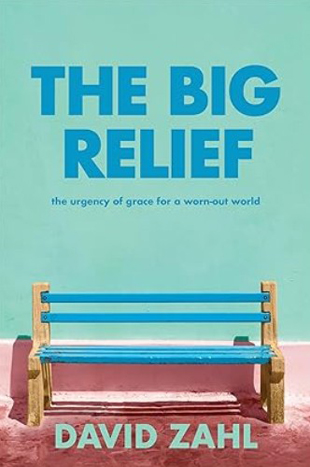
There’s nothing new about a Christian writing about grace. Among the spiritual alphabet, grace is probably one of the two or three most common words in traditional Christian teaching. But this Episcopalian has a fresh take.
For David Zahl, grace is compared to taking a deep sigh of relief.
From what, exactly? The chapters are organized around this. Chapters 1-8 are about relief from deserving, regret, rejection, control, guilt, status anxiety, keeping up, and productivity.
Up until that point in the book, the traditional understanding of grace related to personal salvation, remains subtly and helpfully in the background. The last chapter, number 9, returns to this understanding of grace as “the relief from captivity and death.”
Zahl succeeds at re-imagining grace with this larger focus on what salvation is about. He writes: “When anchored to grace … Christianity remains good news. More than that, faith becomes a source of energy rather than a drain. Its pastoral and existential heart keeps beating, even in the midst of heartache and disillusionment and hurricane-sized disaster. With the grace of God as its foundation, Christianity functions as an engine of love.” And he demonstrates it with ample references to popular culture including film, music, cartoons, opinions polls, surveys, and anecdote.
Also, Christians, note: This author, in chapter 6, offers a nuanced and smart repositioning of how, why, and when the unpopular teaching of “atonement theology” may still make sense.