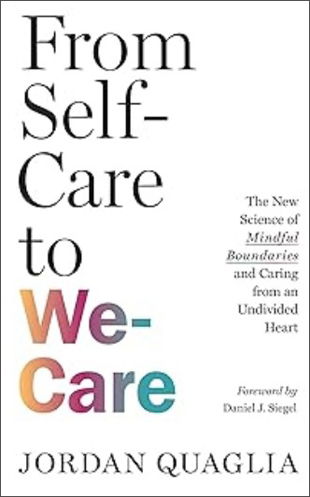
This is author Jordan Quaglia’s first book, but there are many years behind its creation from the classroom, researching, teaching, and even the laboratory. This is an approach to self-care that we haven’t seen before, based on how emerging science blends with ancient spiritual wisdom.
Quaglia directs the Cognitive and Affective Science Laboratory at Naropa University in Boulder. Most of all, he wants readers to embrace their social nature, to stop thinking that they should, or can, “go it alone.” We are “wired for we-care,” as he memorably puts it.
After the problems of pursuing individualistic self-care are outlined, Quaglia explains the importance of discovering we-care. In the creation of this phrase, he relies on Thich Nhat Hanh’s teaching of interbeing. Quaglia writes:
“As Thay would later write when reflecting on what led him to invent this new word, 'The verb to be, can be misleading because we cannot be by ourselves, alone. To be is always to inter-be.' “ Then Quaglia uses science to carry this further. These portions of the book require reading with close attention; the author writes without jargon but his research includes brain science, explaining how it is that “we-care is … primarily determined by what’s happening in our brains.”
There are frequent figures and diagrams to explain research and conclusions, which will appeal to readers of a science background. (Others may simply skip over these parts.) There’s a “we-care practice” at the conclusion of each of the nine chapters which should appeal to everyone equally. The practices are insightful and original, as well as physical and practical in ways we might expect from someone of Quaglia’s wide range of skills. See the excerpt accompanying this review for a practice he calls “Care Clearing” — for maintaining healthy we-care boundaries.