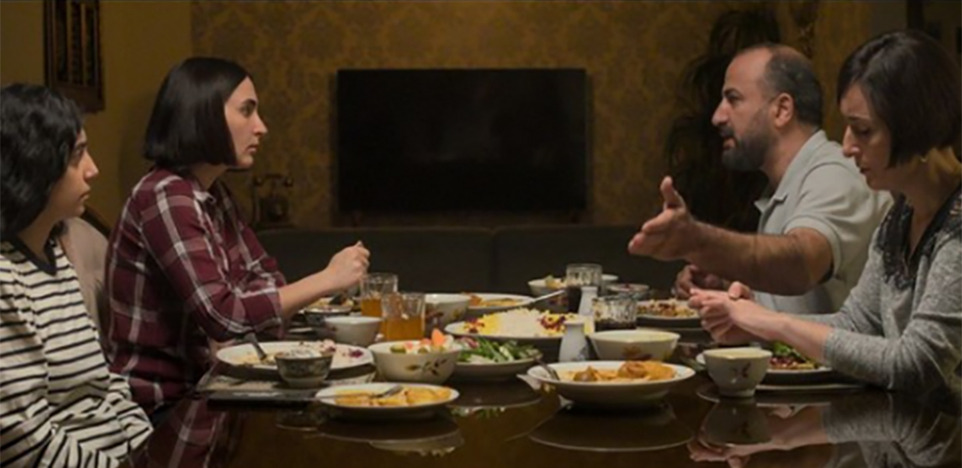
The Seed of the Sacred Fig was nominated for the Best International Film at the 2025 Academy Awards. In May 2024, it competed at the 77th Cannes Film Festival where it won the Special Jury Prize. After he filmed it in Iran completely in secret, the writer and director, Mohammad Rasoulof was sentenced to eight years in prison by Iranian authorities, but he successful escaped to Germany.
This is an unusual thriller in that it focuses not so much upon the victims of violence as on the perpetrators of it. Watching it, we thought about a story told by Buddhist teacher Sharon Salzberg in her book Lovingkindness. She describes an encounter with a Soviet passport official at an airport. “The look he gave me was, I think, the most hateful stare I have ever received from anybody in my life,” she reported. Upset, feeling like his negative energy had poisoned her being, she proceeded to the airport transit lounge. And she thought, “If being exposed to his energy could make me feel so terrible after ten minutes, what would it be like to live inside that energetic vibration all the time?” And this became her response: “A tremendous feeling of compassion came into me for him. He was no longer a threatening enemy, but rather someone in what seemed to be intense suffering.”
The Seed of the Sacred Fig focuses on an Iranian judge experiencing that kind of suffering. Iman (Missagh Zareh), an honest lawyer, has just been made an investigating judge in the Revolutionary Court in Tehran. This means a bigger salary and apartment, to the delight of his wife Najmeh (Soheila Golestani), but it also requires him to sign off on sentences, even death penalties, when he has not even had time to read the case file. He is to keep his position secret and make sure that his family does not put themselves in danger or enable him to be pressured. Najmeh does not tell their daughters, Rezvan (Mahsa Rostami) and Sana (Setareh Maleki), much about their father’s job other than they should be above reproach.
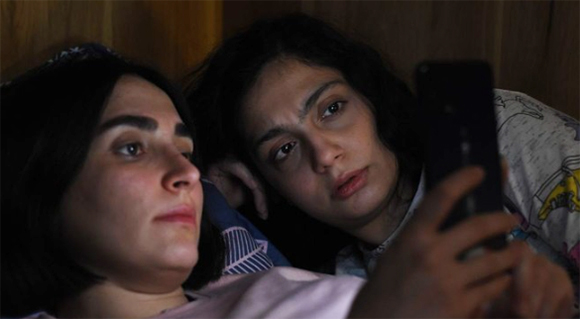
Outside in the streets, students and others are protesting the oppressive orders of the regime. Some of those arrested end up in Iman’s court. Rezvan, who is in college, witnesses an assault on her best friend Sanaf (Niousha Akhshi). But when she brings her home, Najmeh insists they cannot harbor her. Both daughters begin to follow the riots on the street via social media. (The film uses actual footage from the 2022–2023 protests in Iran that were violently suppressed by Iranian authorities.)
Iman has been issued a gun for his protection, and when it disappears from their house, he is overcome with fear of losing his job and paranoia over who could have taken the gun. This sets in motion his interrogations of his family, culminating in their leaving Tehran for a country home. Working for an oppressive regime, Iman becomes the oppressor.
Although the viewer’s sympathy quite naturally lies with the three women as they try to understand Iman’s paranoia, suspicions, and actions, we also found ourselves trying to put ourselves in his shoes. What would it be like to live in the energy field that his job has created around him? While it may be hard to love this enemy, we can have compassion for him.