
On July 27, 2024, Presidential candidate Donald Trump was addressing a gathering of Christian evangelicals when he said, “Christians, get out and vote. Just this time. You won’t have to do it anymore, you know what? Four more years, it’ll be fixed, it’ll be fine, you won’t have to vote anymore, my beautiful Christians.”
Fox News’ Laura Ingraham then gave Trump several opportunities to walk back his remarks, but he did not. He repeated them, and did not clarify his meaning.
What could he mean? Why would this be the last time people “needed” to vote? And why was this message about things being “fixed” a message for evangelical Christians especially?
As the saying goes, when people tell us who they are, we ought to believe them. So, in the absence of further clarification from the candidate, and given his alliance with Christian nationalists, we have to take Trump at his (unclear, bewildering, terrifying) word: that after a Trump presidency, these evangelical Christians will not need to vote because Trump will have arranged everything permanently in their favor.
Christian nationalism poses a huge threat to democracy because, in short, it is theocratic not democratic. It does away with the separation of church and state, which is the cornerstone of our beautiful American religious pluralism. It would put a government signature on discrimination, harassment, and assimilation for people of all other religions and no religion.
And it would not spare Christians either. Christian nationalists define Christianity according to the idea of the elect, those who ought to have dominion over all others. “The elect” includes only a certain set of Christians: far-right white nationalists who believe in a vengeful God and who believe that God set America apart like the Israel of the Hebrew Scriptures.
Thus, their vision is not only anti-democratic, it is heretical to its namesake. One pastor at the center of this movement, Joel Webbon, preaches that Jesus’s teachings are destructive in times like these and should be disregarded: “We don’t need to love our enemies,” he said to his large congregation. “We need to love our friends and crush our enemies.”
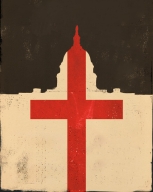 To become educated about what Christian nationalism really is, we recommend watching the documentary film Bad Faith. The film can be overwhelming, so watch it with others and take time to process it afterwards. Gathering a religiously diverse audience will enhance the post-screening discussion.
 In order to resist a movement that privileges or threatens a particular religion, it is imperative that we gather, plan, and act alongside those who worship differently than we do. Consult our project guide Practicing Democracy through Multifaith Engagement for ideas on how to build a multifaith culture in your local community.
- See more Spiritual Resources for the U.S. Election Year.
- To receive these weekly features in your inbox on Mondays, subscribe to the Practicing Democracy Project email list here.