The Broader Sharing Economy
Spiritual Quotation
In a thought-provoking article for Medium, Lily Cole and Adam Werbach describe how the term "sharing economy" has become the buzzword for Silicon Valley's most recent group of billion dollar companies including Uber and AirBnB. "Share" means "to divide one's own and give part to others" and describes the community-building ability "to distribute resources and sustain relationships." The authors are critical of using the word to describe something as limited and rigid as turning the production of goods and services into a market. They estimate that the real sharing economy consists of libraries, buses, roads and parks, courts, rummage sales, charity shops, gardens, and universities. The entire sharing economy may well be worth over $15 trillion in assets. This compares to the venture-backed enterprises that are worth about $130 billion.
In a thought-provoking article for Medium, Lily Cole and Adam Werbach describe how the term "sharing economy" has become the buzzword for Silicon Valley's most recent group of billion dollar companies including Uber and AirBnB. "Share" means "to divide one's own and give part to others" and describes the community-building ability "to distribute resources and sustain relationships." The authors are critical of using the word to describe something as limited and rigid as turning the production of goods and services into a market. They estimate that the real sharing economy consists of libraries, buses, roads and parks, courts, rummage sales, charity shops, gardens, and universities. The entire sharing economy may well be worth over $15 trillion in assets. This compares to the venture-backed enterprises that are worth about $130 billion.
Ambassadors for Civility
Spiritual Quotation
"Behavior is the mirror in which everyone shows their image."
— Johann Wolfgang von Goethe
Our spirituality is revealed to family, friends, neighbors, classmates, colleagues, and strangers through our everyday behavior. There are times when we put others first, genuinely listen to what they say, and treat them with the respect they deserve as sons and daughters of God.
But there are other times when we are rude and selfish, unable to be kind and respectful.
"Behavior is the mirror in which everyone shows their image."
— Johann Wolfgang von Goethe
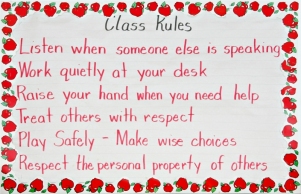 Our spirituality is revealed to family, friends, neighbors, classmates, colleagues, and strangers through our everyday behavior. There are times when we put others first, genuinely listen to what they say, and treat them with the respect they deserve as sons and daughters of God.
But there are other times when we are rude and selfish, unable to be kind and respectful.
Love the Moment
Spiritual Quotation
Artistic Wisdom
Love the moment, and the energy of the moment will spread beyond all boundaries.
— Sister Mary Corita Kent, American pop artist
Song Lines
Storms never last do they baby
Bad times all pass with the wind
Your hand in mine stills the thunder
And you make the sun want to shine.
— Jessi Colter's Storms Never Last, sung by Jessi and Waylon Jennings
Artistic Wisdom
Love the moment, and the energy of the moment will spread beyond all boundaries.
— Sister Mary Corita Kent, American pop artist
Song Lines
Storms never last do they baby
Bad times all pass with the wind
Your hand in mine stills the thunder
And you make the sun want to shine.
— Jessi Colter's Storms Never Last, sung by Jessi and Waylon Jennings
Be Thrifty
Spiritual Quotation
As you work on your financial literacy, you may discover that some words that refer to how money is used have gone out of vogue in contemporary America. "Thrift" is one of them. It is associated with hard work, regular savings, and careful stewardship of resources. In Franklin's Thrift, David Blankenhorn, Barbara Dafoe Whitehead, and Sorcha Brophy-Warren make the connection between thrift and democracy: "Thrift is broadly democratic in its ambition and reach. It aims to create mass prosperity. Toward that end, it seeks to bring new people, often immigrants and the working poor, into its compass and to unite such people in cooperative institutions. Thrift is also democratic in its faith in the power of education. Thrift leaders and institutions have consistently made it a priority to teach children about saving, conserving, and being generous to others." Reflect upon your associations with the word "thrifty." Then identify some ways that you can embrace this broadly democratic virtue in your money practices. Share your ideas with your partner, family, or friends.
Consideration of what being thrifty means to you and yours.
Live Happy
Spiritual Quotation
Deborah K. Heisz is the cofounder and editorial director of Live Happy magazine and former founding editor-in-chief of Success magazine. In this wide-ranging book, she has chosen ten key practices of a happy life.
At the top of the list is attitude:
"Your attitude is the way you look at life. It's a judgment you hold — consciously or unconsciously — about others, yourself, your circumstances, and the world around you. And it is the most powerful tool you can use to craft a happy life. It is, in fact, essential to your happiness. Your attitude — whether positive or negative — affects the way you experience the world. It also lays the foundation for every other happiness practice."
Under this thematic umbrella, you will find helpful essays by a variety of authors on discovering and achieving dreams, saying yes to life, taking note of the good, looking forward, and pondering the science behind the wisdom of a positive attitude.
We were pleased to see that Heisz has included in her list of ten key practices three that appear in our Alphabet of Spiritual Literacy — connection(s), gratitude, and meaning. We agree that the remaining practices are crucial to choosing joy: creativity, mindfulness, health, resilience, spirituality, and giving back.
There are plenty of stories, resources, and the latest scientific research in Live Happy. By the time you reach the end of the book, you will have been introduced to many new ways of experiencing and sharing happiness. The writers of these essays exude a vitality that bears witness to their advocacy of positive psychology. We end with a quotation from Melody Beattie which shows the energy in the spiritual practice of gratitude:
"Gratitude makes sense of our past, brings peace for today, and creates a vision for tomorrow."
A survey of ten paths to contentment.
Inspiring Generosity
Spiritual Quotation
Barbara Bonner started her life as an art historian and then moved on to leadership positions at three New York Museums. She later served as Vice-President of Bennington College and Kripalu Center for Yoga and Health. She now has her own consulting practice focused on helping nonprofits transform their philanthropic support.
In this inspiring collection of quotations, poems, and stories, Bonner probes the spiritual energies of generosity which she defines as a practice that can change the world. She sees it also as compassion in action and as a major virtue in all the world's religions.
Bonner draws out the strong ties between philanthropy and generosity and goes on to explain her selection of 14 stories about generosity heroes.
Here is a sampler of quotes from the book. Let these words draw out your own best impulses to be of service to others:
• "Generosity is the most natural outward expression of an inner attitude of compassion and lovingkindness."
— His Holiness the Dalai Lama
• "If a beggar approaches me and puts out his hand, and I have only a $10 bill, I have to give it to him. It's none of my business whether he plans to spend it on infant formula for his starving baby or on a pint of Thunderbird."
— Barbara Ehrenreich
• "To cultivate generosity directly is another fundamental part of living a spiritual life. Like the training precepts and like our inner meditations, generosity can actually be practiced. With practice, its spirit forms our actions, and our hearts will grow stronger and lighter. It can lead to new levels of letting go and great happiness."
— Jack Kornfield
• "Real generosity toward the future lies in giving all to the present."
— Albert Camus
• "Charity should begin at home but not stay there."
— Phillips Brooks
An inspiring collection of quotations, poems, and stories about generosity.
The Power of Giving
Spiritual Quotation
Azim Jamal is an international speaker and the chairman and founder of Corporate Sufi Worldwide (www.corporatesufi.com), a company that specializes in inspiring leaders at all levels to unleash potential and regain balance. Harvey McKinnon is one of North America's top fund-raising experts. Early in this paperback, the authors quote the Trappist monk Thomas Merton who said:
"Souls are like athletes who need opponents worthy of them if they are to be tried and extended and pushed to the full use of their powers."
The best exercise for the soul is giving. Helping others reduces self-centeredness, promotes good health, reduces fears, enables us to make good use of our potential, and helps us find meaning, fulfillment, and purpose. Or as social activist Cornel West put it: "A rich life consists fundamentally of serving others, trying to leave the world a little better than you found it."
Jamal and McKinnon focus on what you can give — gifts of time and money or less tangible gifts of love, hope, and leadership. There are plenty of places to give — your family, your community, nonprofit organizations (the authors provide a long list of types of nonprofit groups), and to the planet.
The closing chapter is on corporate giving. Be sure to check out the excellent resource list at the end of The Power of Giving.
The art of giving as the best exercise for the soul.
Love as a Way of Life
Spiritual Quotation
Gary Chapman is an ordained minister and licensed marriage counselor. He is the author of the bestselling The Five Love Languages which has sold more than 5 million copies and was the first in a series of love-language books. Chapman is the host of a national radio program, A Growing Marriage, and a popular speaker. In this top-drawer spiritual work, he muses on the satisfactions of a loving life and then shares the seven secrets of bringing it into all of our relationships. They are:
• Kindness: Discovering the Joy of Helping Others
• Patience: Accepting the Imperfections of Others
• Forgiveness: Finding Freedom from the Grip of Anger
• Courtesy: Treating Others as Friends
• Humility: Stepping Down So Someone Else Can
Step Up
• Generosity: Giving Yourself to Others
• Honesty: Revealing Who You Really Are
Each chapter contains a treasure trove of practical material including a questionnaire, a definition of the character trait in the context of authentic love, habits to acquire, counterpoints to the character trait which must be overcome, a section on how this quality could change how you relate to others, and a mix of questions and suggestions for personal growth.
In the chapter on Kindness, Chapman defines this character trait as "noticing someone else and recognizing his needs. It means seeing the value in every person we meet. And like every trait of a loving person, kindness can be much simpler, and more powerful than we realize." In a section on the big impact of small acts Chapman includes one man's list of kindnesses he observed during one day (an administrative assistant boots up his computer before he arrives in the office; when he leaves the office building, a security man opens the door for him; when he arrives home, his dog meets him at his car wagging his tail). This is a rewarding exercise to do since it arouses within us an appreciation for all the little kindnesses which make our life more pleasant and bearable.
Chapman presents a list of simple ways we can show kindness to others (tip people well, give a store clerk a compliment, share an umbrella with someone when it is raining). Speaking kindly helps to combat thinking negatively about others. Practicing this quality has many physical and health benefits, and it enhances joy in our lives. We liked the following practices at the end of the chapter:
"At least two mornings this week think of five opportunities you might have in the day ahead to express kindness to someone in words or actions. At the end of the day record the acts of service you did."
"Practice hearing yourself talk. After each verbal encounter, ask yourself, What did I say that was kind? and What did I say that was unkind? Then apologize for each of your unwholesome statements."
We also found much to admire in the chapter on courtesy, a subject that is near and dear to our hearts. Chapman defines it as "the act of treating everyone as a friend." It involves thousands of little actions toward strangers, friends, and family members. Courtesy is needed in the neighborhood, on the road, at work, and on the Internet. The public think tank Public Agenda found that 79 percent of those polled think lack of respect and courtesy is a serious national problem.
The author points out that July has been designated National Cell Phone Courtesy Month. You may wonder why such a focus is needed until you take to heart a recent survey in which 91 percent of the respondents said they have been victims of "technology-related public displays of insensitivity." In these times it is countercultural and takes intention and diligent spiritual practice to be courteous. Chapman gives plenty of examples in this chapter.
Presents seven steps on the spiritual practice of love in everyday life.
Hospitality - The Sacred Art
Spiritual Quotation
The Rev. Nanette Sawyer is founding pastor of Wicker Park Grace, an innovative Christian community in Chicago that holds hospitality as a core value. An ordained minister with the Presbyterian Church (USA), she serves as a representative on the Interfaith Relations Commission of the National Council of Churches USA. This paperback is part of the Art of Spiritual Living series from Skylight Paths Publishing.
Sawyer sees the spiritual practice of hospitality as sending out circles of meaning and connection in our lives. Its three main qualities are receptivity (opening the door to God), reverence (entering the space of love between us), and generosity (giving the gifts that we have received). Her interfaith exploration covers these aspects of the spiritual power of invitation and welcome:
• Hospitality to God: Welcoming God's Welcome
• Hospitality to Self: Inviting the Authentic Self
• Hospitality to Family: Offering Full Presence to Those Closest to Us
• Hospitality to Neighbors: Becoming the Merciful Neighbor
• Hospitality to Strangers: Pursuing Kinship Rather Than Estrangement
• Hospitality to Enemies: Extending Generosity Through Non-Retaliation
• Hospitality to Creation: Knowing Creation Relationally
The author includes in this excellent treatment of hospitality pieces on centering prayer, mantra practice, compassionate acceptance, making intentional conversation, dealing with fear, looking for the good in our adversaries, and embodying a life of balance with creation. She concludes:
"When we make choices to become more hospitable, we find that we become more whole ourselves — open to the world, to life, to relationship. Living centered in hospitality is living centered in love, trust, possibility, and hope. When we allow God and true self to come together in our inner core, we find ourselves filled with a love that we can't help but share."
Try a Spiritual Practice on Nurturing
Presents hospitality as a spiritual practice that enriches all aspects of our private and public lives.
The Five Secrets You Must Discover Before You Die
Spiritual Quotation
John Izzo is the bestselling author of Second Innocence. As a speaker on purposeful living, he has addressed more than one million people on four continents. This paperback is based on his TV series for the Biography Channel. The quest behind the project was to explore what it takes to live a full and meaningful life.
Izzo began by asking 15,000 people across the United States and Canada to send him recommendations of the wise elders in their lives. Out of those responses, 235 individuals ranging in age from 59 to 105 were selected and interviewed over a period of one to three hours. What they came up with is that a life worthy of living contains an admirable mixture of happiness (a day-by-day contentment) and meaning (a sense of connection).
Three of the five secrets these wise elders confirm are:
• Be true to yourself.
• Leave no regrets.
• Give more than you take.
On the subject of regrets Izzo writes:
"Regret is possibly the one thing we all fear the most; that we might look back on our lives and wish we had done things differently. In my experience from the last 30 years, validated in these interviews, death is not what we fear the most. When we have lived life fully and done what we hoped to do, we can accept death with grace. What we fear most is not having lived to the fullest extent possible, to come to the end of our life with our final words being 'I wish I had.' "
The spiritual antidotes to regret are taking more risks, living as if your time is short, and letting go of fears and timidity. On the subject of giving more than you take, Izzo talks about asking what life expects of you, losing yourself, and learning to cry for the world, not for yourself. Reading these passages, we were impressed with how much can be learned from elders who have weathered the storms of life and have pondered the values that give life meaning. Hopefully, this book will encourage readers to pay more attention to their elders.
Advice from wise elders on living a happy and meaningful life.