
 The Feelings We Fold Away
 Posted by
 They say high school is supposed to be the time of your life, the place where friendships bloom, memories are made, and everything feels possible. But for me, it began with a quiet kind of unraveling.
Two weeks in, I told myself I was thriving. I wore smiles like armor, repeated mantras like: “Change is good. You’re growing. You’re lucky to be here.” But inside, it felt like I was screaming into a crowd where no one turned their head. I missed my old school, my people, my comfort. Everyone already had their place. Except me.
One morning, I sat under the trees, AirPods in, pretending the music could drown out the ache in my chest. The building behind me was loud, full of voices I couldn’t connect with. Then it hit me like a tornado in my chest. Doubt. Sadness. Fear. What was I doing here? Why did I feel so invisible?
I saw a friend walking toward me and panic rose in my throat. I couldn’t let her see me like that. I rushed to the administration office, tears already slipping down my cheeks, and begged to go home. But they told me to wait. So I sat there, shaking, trapped in the stillness of a panic attack.
Then Marium, my mentor, walked in. She didn’t tell me to be strong or brush it off. She simply sat beside me, her presence warm and steady, like a quiet lighthouse. I couldn’t explain everything, but in her presence I felt something I hadn’t in weeks: safe. Seen. Heard.
That moment cracked something open in me — not just pain, but perspective. If I, with all my privilege and support, could feel this lost, how many others were silently crumbling too? How many never get their Marium? That question stayed with me. And without realizing it, it became the seed of what would later grow into The Feelings Box.
Months later, during my internship at Indus Hospital, I thought I knew what to expect. But the pediatric cancer ward changed me. The children there carried pain deeper than anything I’d known, yet they smiled, played, and radiated a strength that stunned me. And I kept thinking about that day in school, wondering: if my burden had felt so heavy, how much heavier was theirs?
That’s when the idea came: The Feelings Box.
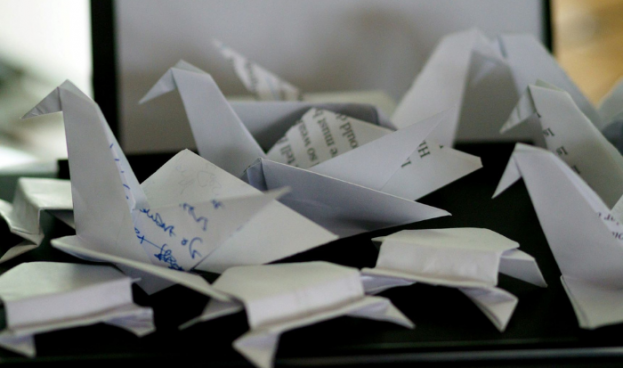
It started in my school as a simple box with a sign: “Write what you feel. No names. No judgment.” I didn’t expect much, but the box filled quickly. Notes folded into tiny squares: heartbreak, anxiety, joy, stress, hope. It was as if everyone had been waiting for permission to feel and now they have it.
Later, I brought the box to Indus Hospital with three friends. Language was a challenge since many children didn’t speak Urdu, and some couldn’t read or write, but connection found its way.
One boy stood out. He was shy, pressed close to his mother, unsure of us. He didn’t speak our language, but one of my friends knew a little Pashto. Slowly, he opened up. He couldn’t write, so we asked what he wanted to share. His words were simple: “Main dard mein hoon.” I am in pain. He asked us to write it for him.
Before we left, I offered him a cookie. At first, he hesitated, then smiled, took it, and hugged me. That hug said more than words ever could.
We invited parents and hospital staff to write, too. A parent scribbled a prayer. Another wrote that every day was a sajdah, a plea for their child’s healing. A nurse wrote about how lucky she felt to serve these little warriors. These notes weren’t just feelings. They were faith. Hope. Burdens finally put into words.
That’s when I understood: The Feelings Box was never small. It was sacred. A place where people’s voices could live without fear. A quiet reminder that being heard, even anonymously, can lighten a load you’ve been carrying for too long.
Looking back, I realize that Marium’s quiet act of kindness was the first ripple. Her empathy inspired me to create something that would allow others to feel seen, too. Each note in that box became another ripple — a message passed from one heart to another, spreading comfort in ways none of us could measure.
I used to feel ashamed of that day I broke down in school. But now I know: that version of me was brave. Because from her came something beautiful.
The Feelings Box didn’t fix anyone’s life, but it whispered, “You’re not alone.” And sometimes, that whisper is what keeps someone going. Because even the smallest ripple — a folded note, a shy hug, a shared cookie — can travel farther than you think.
And in that quiet, something begins to heal.
Zohra Irfan comes from Pakistan. At the time of writing, she was 17 years old.