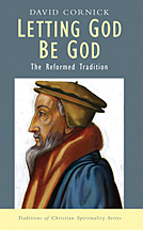
"Reformed" as a label originally referred to Swiss Reformers who wanted to distinguish themselves from "Lutheran" and "Catholic" perceptions of the church. During the sixteenth century the term was extended to many other Protestant churches. The World Alliance of Reformed Churches formed in 1970 and included Congregational and Presbyterian congregations.
In this volume in the Traditions of Christian Spirituality Series, David Cornick, the General Secretary of Churches Together in England, delineates the historical development of the Reformed tradition from Calvin and Zwingli all the way to the modern figures of George MacLeod who founded Iona (1930s) and Roger Schutz who established Taize (1940s). Along the way, he explores the importance of worship and private prayer, the doctrine of predestination, the world as a theatre of God's glory, and the interest in ecumenism the twentieth century's Reformed communities.
Cornick notes the emphasis upon the transcendence and awesomeness of God in the Reformed tradition. There is also an accent on prayer. As Karl Barth put it, "To be a Christian and to pray are one and the same thing; it is a matter that cannot be left to our caprice. It is a need, a kind of breathing necessity to life." The written prayers of John Baille reveal the lyricism of Reformed devotional life. The Bible is central to this tradition as evidenced in the preaching and writings of Walter Brueggemann, Robert Schuler, John Hicks, and C. S. Song. The social gospel is also important in the Reformed tradition. The love of our neighbor is an essential part of faith. The overarching sense of God's lavish grace is what produces joy.