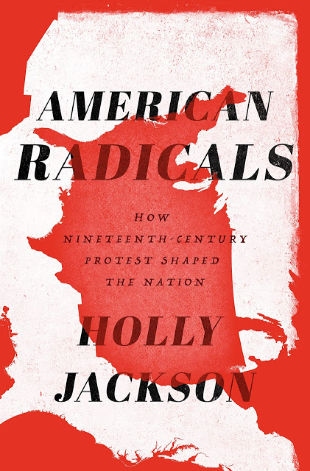
Although historians have given us portraits of such well-known heroes of the early years of the United States, such as George Washington, John Adams, Thomas Jefferson, and Benjamin Franklin, they have slighted those from later years who were dedicated to a broad spectrum of human rights, civil liberties, and racial and gender equality. Holly Jackson's wide-ranging and engrossing portraits of these individuals goes a long way in rectifying that gap in the history of protest.
With rigorous ethical elan and literary finesse, Jackson, an associate professor of English at the University of Massachusetts, Boston, stirs our minds and souls with accounts of the lives and works of American radicals, outsiders, pariahs, and those living on the margins of nineteenth-century society. They were the forerunners of the protesters and counter-cultural rebels of the 1960s. Many of these dreamers who yearned to create a better America were written off as "history's losers."
These zealots emerged from the nation's ghettos, salons, utopian communes, and other unorthodox places to keep alive the nation's defining ideals. Among the American radicals covered on these pages are Frederick Douglass, William Lloyd Garrison, Harriet Tubman, John Brown, Robert Owen, George Ripley, Susan B. Anthony, Francis Wright, and Elizabeth Cady Stanton.