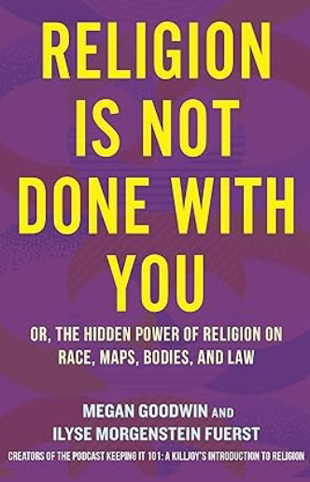
“We need you to know that even if you’re done with religion, religion is not done with you. Which is why we wrote this book.” And that’s what these authors aim to do.
Their tone is delightfully Millennial. For example: “You get to feel about religion however you want. Honestly, that’s all you. God(s) bless. Or not! Any way you feel about religion is fine by us.” And yet, they do intend to persuade you — that religion impacts your world no matter what.
They offer a helpful, simple definition of “religion” as “what people do.” These doings manifest themselves in institutions, power networks, laws, customs, prejudices, and politics that impact you whether you are religious or not.
The core of it is chapters 2 through 4. “Religion Is Global.” “Race Is Made of Religion.” And “Religion Is Politics.”
For example, when they say that race is made of religion, they mean: “We tend to think of religion as something voluntary, something we opt into or, perhaps, choose to stick with if we have been raised in a particular faith. [But any person named] Ahmed cannot opt out of religion at the airport. More to the point, the airport and its power structures will assume Ahmed is Muslim and therefore a threat, no matter what he does or does not believe.”
With humor and lots of quiet scholarship, Goodwin and Fuerst will open some eyes to the continuing and enduring impact of religion in American life.
The final chapter is called “Homework” and is charged with an admirable purpose: “What do you do with a problem like religion?... Not by ignoring it or insisting it go away, but by making more space for more people to be religious in more ways — and fighting for justice for all people, regardless of whether they’re religious or not.”