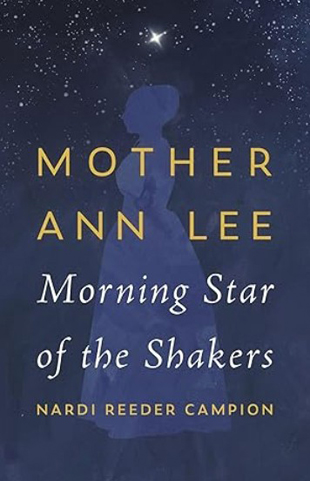
The Shakers are a mostly forgotten religious movement — a Protestant Christian sect — that began in England in the 1740s, then expanded and deepened in the British Colonies of North America beginning in the 1774. They were egalitarian, communal, pacifistic, and charismatic. It is from the latter that they earned the name “Shakers,” as they tended to worship with ecstatic dancing, or “shaking.”
And note: “were” — the past tense verb — is perhaps inaccurate, because as of this writing there are still three living members of the Shakers living in a Shaker community in Maine.
From the start, Shakerism has been committed to personal celibacy (teaching that the “fall” of Adam and Eve in the Garden, and thus all human sin, was related to the sexual relations of the first couple). This means that when Ann Lee became the leader of the Shakers in the fledging United States (first, in Albany County, New York) in about 1780, they were seeking to influence both church and culture in ways that were countercultural.
Ann Lee is called “Mother” Ann Lee in the book’s title, reflecting the respect and reverence with which her fellow Shakers held her during her lifetime and in the history of the movement.
But Lee’s life was full of turmoil, as biographer Nardi Reeder Campion relays well. Campion died in 2007; this biography has been published and re-published a few times.
For example, Ann Lee’s husband abandoned her when they arrived in America, as immigrants, from England. Campion’s biography tells that story, and the narrative of Lee’s turn from this disappointment toward what became leadership of a growing religious movement involving spiritual and civic leadership, both.
She said that she wanted “to turn the world upside down,” and this book reveals how an extraordinary woman was able to do that, against many obstacles (and sometimes violent opposition — the Shakers maintained neutrality, for instance, during the Revolutionary War) throughout the United States in the first decade of the young country.
Why is this of interest to readers, still, today? In part because Ann Lee’s spiritual vision was ahead of its time. She and the Shakers sought to create communities that were characterized by “salvation,” by which they meant places where love reigned (without sex), people cared for each other, living in careful and deliberate community, and everyone together connected around a life of spirit.