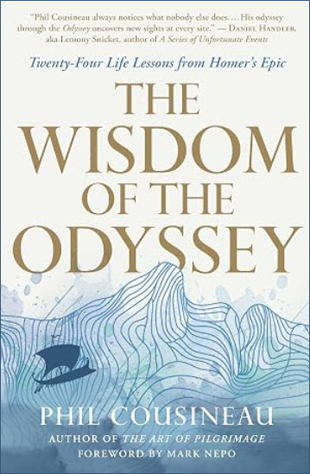
We’ve known Phil Cousineau for decades. He’s the author of the worldwide bestseller The Art of Pilgrimage: The Seeker's Guide to Making Travel Sacred, and he used to host Global Spirit, an “internal travel series” on PBS and LinkTV. He is profiled in our Living Spiritual Teachers project, and his e-course on Transformative Travel is one of the best we have in our on-demand library.
Phil brings a wide variety of experiences to this subject — which he applies to the most iconic travel narrative of all time. And it's just in time to feed the curiosity of the millions of people who are heading to theaters to see The Odyssey, a summer 2026 movie starring Matt Damon, Tom Holland, and Anne Hathaway.
“We sorely need the wisdom of the Odyssey unlocked in our modern times,” writes Mark Nepo in a foreword as he recommends Cousineau’s way of opening up the lessons to be gleaned from Odysseus’ epic journey.
This is a timeless account of the spiritual practices of questing, zeal, listening, and justice.
The book is divided into two parts, first called “The Adventures,” and second, “The Homecoming.” This is Cousineau’s way of summarizing the epic, and together the two themes form a master’s class in the narrative, characters, and symbols of the story. Along the way are many spiritual lessons — and themes that have persisted in spiritual literature for more than two millennia due to the influence of Homer’s great work — including the reunion of father and son, the determined hero and his scars, gods who appear when human beings are in trouble, the importance and meaning of home, learning from suffering, and most of all, life as a journey that never ends.
Chapters, which Cousineau cleverly calls “books,” to mirror the structure of the Odyssey (and many other classic works of ancient and medieval origin), all conclude with a summary of “Homeric Wisdom” at the end. See the excerpt accompanying this review for an example of this from the end of Book 8: “The Spell Cast by a Well-Told Story.”