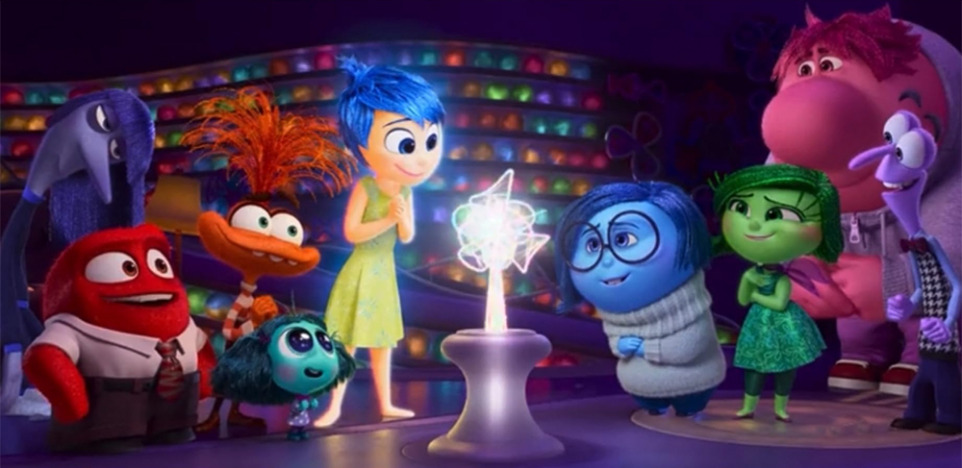
The 2015 animated masterpiece Inside Out took on the challenge of helping us read our feelings, manage our emotions, and create emotionally rich intimate relationships. This was done by introducing us to the emotions inside the mind of Riley, a young girl, at “Headquarters.” Trying to keep Riley happy were Joy (voiced by Amy Poehler), Sadness (Phyllis Smith), Fear (Bill Hader), Anger (Lewis Black), and Disgust (Mindy Kaling).
Inside Out 2 is a sequel to that film. Riley (Kensington Tallman) is entering puberty, and new emotions arrive: Anxiety (Maya Hawke), Envy ( Ayo Edebirl), Ennui (Adele Exarchopoulos), and Embarrassment (Paul Walter Hauser). The first group of emotions are intent upon filling Riley’s “Sense of Self” with only good memories and feelings (“I’m a good friend”; “Mom and Dad are proud of me.”) But the new emotions have other priorities. Anxiety is concerned that Riley will experience things like rejection and disappointment. She says “It’s not about who Riley is but who she needs to be.”

The plans of the different sets of emotions are tested when Riley and her two best friends get invited to a hockey camp. If they can impress the coach, they will be chosen to be part of the Fire Hawks when they get to high school. Now bad memories are added to Riley’s Sense of Self and she begins to doubt herself. After Joy tells Anxiety that she can’t choose who Riley is, Anxiety admits she was just trying to protect her.
Spiritual teachers have long advised that we learn to embrace all of ourselves. In the movie, the emotions get together and declare that “we love all of our girl.” This process is called “shadow work.” Buddhists have practices designed to help us work with “negative emotions” such as those who come to Riley at puberty. Try this one to underline what you learn from Inside Out 2. It’s a “Meditation on Calling Up Difficult Emotions” from Sharon Salzberg.