
On Tuesday, September 10, as I watched the Presidential debate between Former President Donald Trump and Vice President Kamala Harris, I noticed that Mr. Trump kept going back to the issue of the border and immigration.
Politicians often do not answer the question asked, a strategy called deflection. Vice President Harris used this strategy a time or two as well.
But Democrats and Republicans alike usually present deflection as a “reframing of the real issue” or use it as an opportunity to address a topic ignored by the moderators.
Not this time. Time and again, Trump deflected the question and returned to the issue of immigration, each time characterizing “immigrants” as criminals or worse. He is so consistent in this characterization that the word “immigrant” in his mouth and in the ears of the hearer does not call to mind hard work, the American Dream, the words on the Statue of Liberty, or the refrain from the musical Hamilton: “Immigrants — we get the job done!”
When Trump says “immigrant,” he means the opposite of all of that. He wants to change the meaning of the word.
Trump has been verbally assaulting immigrants since he first rode down the elevator at Trump Tower in New York in 2015 to announce his run for President. I won’t repeat what he said then. (It’s a matter of record easily referenced.)
As a teacher of American literature, as a lover of ancient scriptures that emphasize welcoming the stranger, and as a deeply spiritual person who knows that we are all connected, this defamation project offends me.
And so, I brought to Tuesday’s debate my understanding of Trump’s defamation project. And I almost missed something.
When he repeated the false claims about Haitian refugees, whom he called “immigrants,” I thought, “Here we go again.” When he doubled-down on the claim that these Haitian refugees were eating people’s pets, I thought, “This project is escalating into absurdity.”
Trump’s critics have keyed on this absurdity and circulated jokes and memes based on the fake story. This is an understandable response to absurdity, but perpetuating the story in this way only gives legs and teeth to Trump’s lie and obscures the deeper issue:
Trump’s claims about Haitian immigrants weren’t absurd; they were racist.
Racism abhors facts and reality. Racism does not need actual evidence from residents of Springfield, Ohio (but it can actually hurt them). Racism does not even require that a candidate talk about race in any explicit way.
Racism only requires fear.
And with this barbaric lie about Haitian immigrants, most of whom are black, Trump seized on the opportunity to use his anti-immigrant platform to tap into the oldest and deepest American fear: anti-blackness.
With this lie about black immigrants, Trump gained coded access to the powerful powder keg left us by American history.
Bomb threats with racist language are already threatening our new neighbors in Springfield, Ohio. Schools have been evacuated and closed. We must all do our part to dampen the spark on its way to the powder keg. And we can do this by grounding ourselves in our spiritual principles and making sure that we embody them and live them out as loudly as we can.
Resmaa Menakem is the go-to teacher for this moment. His book The Quaking of America not only predicted the reckoning and unrest we are experiencing but also, and more importantly, offered practices for living through it while staying grounded and maintaining access to our best selves.
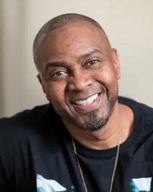 All of his work addresses the concerns of this week; you might start with our overview and then review the books and practices.
We recommend starting with a settling exercise like A Resource Toy Box and then trying the more challenging “Not Your Fault, But Still Your Problem”; this practice invites us to accept responsibility to stop white-body supremacy from spreading.
- See more Spiritual Resources for the U.S. Election Year.
- To receive these weekly features in your inbox on Mondays, subscribe to the Practicing Democracy Project email list here.