Quotations Search Results
We found 347 matching quotes
We Need to Talk
(Note: The names and locations in this article have been fictionalized because the story is true.)
Three churches in Lincoln, Nebraska, were planning a screening of the documentary film Bad Faith: Christian Nationalism’s Unholy War on Democracy. This film unmasks Christian Nationalism as a form of White Supremacy that threatens democratic values like equality and freedom of religion.
The largest of the three sponsoring churches is led by a brilliant and compassionate pastor named Gabriel, who offered to host the event.
However, a furor erupted in Gabriel’s church over what some saw as the “partisan” nature of the film’s trailer (congregants had not yet seen the actual film!). Several families decided to leave the church; others vowed to hold their tithes ransom. Self-identified Democrats and Republicans in the congregation were furious with him. What’s worse, most were talking about him and not to him.
Gabriel, a husband and father of two bi-racial children, was not sure his job would survive the screening. So he had to back out of hosting the film and cancel his church’s sponsorship. He decided that they would spend the time set aside for the screening a different way: talking, as a congregation, about how to be open to different ideas, disagree, and remain in community with one another.
Gabriel is a wise pastor, and he is trying to do right by his people. We all need places to go where we are challenged, not just affirmed. We need to practice being present and at peace with others who share different views. Spiritual and community leaders must protect the spaces where that can happen — now more than ever, as healthy debate and civil disagreement seem nearly extinct.
How we talk to one another – and even before that, how we see and approach one another — matters greatly. Each assumption we make, each hard line we draw, and each word we say is a thread that becomes part of the fabric of democracy. If we come with rigidity in our hearts and acid in our words, the thread will fray and break — all the way from the social hall to the halls of Congress.
Humility is a stance well known by those seeking deeper spiritual attunement. But humility is not a saints’ accomplishment; it is an everyday skill, and a necessary building block for relationships with difficult others. We can apply humility in terms of ourselves (“I do not know everything”) and others (“They may have something to teach me”) as we approach a difficult conversation.
Martin Luther King, Jr., once said that a riot is the language of the unheard. The same might be said for riotous, unhinged, or rigid speech. Those who do not feel heard shout louder. Therefore, listening is key. Listening is more than being quiet when someone else speaks; it is letting their words have an impact. Some ways to listen better are to intuit the needs and longings behind another’s words and to imagine what might influence the other’s position.
See more Spiritual Resources for the U.S. Election Year.
To receive these weekly features in your inbox on Mondays, subscribe to the Practicing Democracy Project email list here.
24 Weeks to the Election
Swearing Off Snark
Consider sources of media that might be causing you to automatically assume people around you are stupid, or that mean, snarky comments are good entertainment. Are there television shows or websites that may be influencing you? Can you take a break from those media and see if it influences the way you talk to others? Experiment and see if you notice a difference.
An exercise for breaking the cycle of unkind, vain, or foolish conversation.
A Prayer in Response to the Arizona Shootings
On January 8, 2011, Gabrielle Giffords, a Democratic member of the U.S. Congress, was shot in the head outside a grocery store in Tucson, Arizona, while holding a public event. Six other people at the gathering, including a judge and a nine-year-old girl, were killed by the shooter.
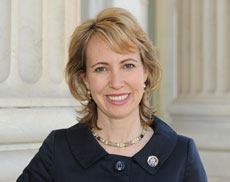 On January 8, 2011, Gabrielle Giffords, a Democratic member of the U.S. Congress, was shot in the head outside a grocery store in Tucson, Arizona, while holding a public event. Six other people at the gathering, including a judge and a nine-year-old girl, were killed by the shooter.
Brenda Shoshanna, Jewish Dharma
Do not gossip or listen to gossip (lashon hara). This is one of the biggest mitzvot. You are not to gossip, insult, lie, deceive, or slander. When you listen to gossip, your fellow man is brought down. This can be so serious that when you insult someone in public and he blushes, you are considered to have killed a part of that person's soul.
Do not gossip or listen to gossip
Martin Luther King, Jr., Waking Up to What You Do
We are responsible not only for the lies we speak, but for the truth we fail to speak.
The truth we fail to speak
Franz Metcalf in What Would Buddha Do? 101 Answers to Life's Daily Dilemmas
Look upon one who tells you your faults as giving you a hidden treasure, as a wise person who shows you the dangers of life. Follow that person: if you do, you will see good and not evil.
Look upon one who tells you your faults
George Caleb Bingham's Election Series
George Caleb Bingham was born on March 20, 1811, in Augusta County, Virginia. The family moved in 1819 to Missouri Territory where George grew up. He taught himself to paint and when he moved to St. Louis in 1836, he opened a portrait studio. He also developed a deep interest in politics and became convinced that he should speak out against slavery, which he regarded as an immoral threat to the Union.
In 1948, Bingham was elected to the Missouri House of Representatives, becoming one of the few artists to serve in elected political office. He was named Missouri state treasurer in 1862, an office he held for three years.
Although portrait painting was Bingham's bread-and-butter art, by far the most unusual and fascinating paintings done by Bingham were designed to spread his ideal of free people and free institutions. Most famous of these are his Election Series.
The first of this trio of paintings is The County Election (1852). It reveals the spunk and energy of individuals getting ready to vote after playing games (notice the two men tossing a coin). This chaos represents the darker side to voting that many citizens are willing to entertain.
Click on the photo to see a larger version.
Bingham continues his depiction of the unruly sides of voting in Stump Speaking (1853 – 1854) in the persona of three men dressed in white who represent the present, past and future of American politics.
Click on the photo to see a larger version.
The last painting of Bingham's Election Series is titled The Verdict of the People (1854 – 1855). It reveals the rough and tumble political life of the frontier.
Click on the photo to see a larger version.
All three of these very detailed paintings fit in perfectly with our Practicing Democracy Project, encouraging reflection on politics, voting, freedom, and meaning.
Spiritual Practice
In Now! The Art of Being Truly Present, Jean Smith offers some thoughts on politics, followed by a mindfulness gatha.
"If politics is dirty, it is our responsibility to change it. Only an informed electorate that casts its ballot can ensure that politicians truly govern by the consent of the governed, rather than the few who have the loudest voices or make the largest campaign contributions. In recent decades, fewer than 20 percent of registered voters [in the United States] usually participate in primary elections. When we do not inform ourselves about issues and the differences among candidates, communicate with elected officials, and vote, we have no right to complain about politics. We are part of the problem, because ignorance and apathy are paths of harming.
"In mindful gratitude
for such freedom as I have,
may I overcome
ignorance and apathy
and become a force for good."
Study Bingham's Election Series and share it with a friend. Which of the characters in the paintings seems most like you? Give a reason for your answer. In what ways can you become "a force for good" during the next election season?
Three paintings depicting scenes of the American political process.
Buddha U
"It is incumbent on all to stop hurting and harming others and cultivate a boundless heart full of benevolence."
- Piyadassi Thera
"How would your life and the lives of those around you change if:
you saw winners, not sinners
you chose acceptance over judgment
you cultivated constant gratitude rather than indifference
you reached out rather than held back
you did more giving and less receiving
you focused on the positive and not on the toxic
you listened more and spoke less
you greeted hostility with hospitality
you encouraged the discouraged
you tried to turn sadness into gladness
you smiled sincerely and boldly at everyone you saw
you expanded love and enlarged mercy
you lived with confidence and faith
you expressed compassion to all human and animal beings
"How different would things be if you and others acted and lived out these patterns of life."
A list of patterns in life that demonstrate benevolence.
Peace
"When you finish reading these teachings, take a vow not to complain anymore. Every time you want to complain, control your mouth. That includes controlling yourself from writing it down. Don't be smart and think that even though you do not say anything, you can make others read your written complaints!
"If you mess up, don't worry. There were many hours you didn't mess up. Congratulate yourself on that. If you mess up, push yourself the next day. When do you give up? You never give up. Do you want to go back to what you were? Do you want to be unhappy? Do you want to waste the rest of your life until they bury you in the ground being a complainer or do you want to leave a mark of kindness behind?
"If you complain 50 times a day, then cut it down to 48. Then make it 47, 46, 45, etc. Remember, you created the karma to be in this situation and to have this rebirth. You picked. You made the choice. You did it. You have to experience it. It is very simple. Don't complain. Don't blame others. Take responsibility. Then your anger lessens, you begin to accept people, your sour face becomes sweet and it becomes a much better life.
"When you stop complaining, you will find that people change. Why? Because you change. When you stop complaining, your anger will become less. Why will your anger become less? The anger comes from you, therefore you have to do something about it, not other people. Even if the 20 people who made you angry say they are sorry, there will be another 20 people next year, next month or next week, in another place, who will make you angry. If you don't change, people will keep making you angry. If you change, people cannot make you angry, wherever you are. Then you start living."
Tsem Rinpoche's on taking a vow not to complain any more.
Saving Civility
"The Internet, which has become a nearly indispensable global communications tool in only a few short years, has afforded many positive benefits, far outweighing its drawbacks. Whatever your personal view, it is fair to say that the Internet, in all its forms, has altered the way that most of us communicate interpersonally.
"In July 2010, the Pew Research Center issued a report, 'The Internet and the Future of Social Relations,' based on 895 respondents, 371 of whom were technology experts. Asked to project, in 2020, whether the Internet will have produced a mostly positive or negative effect on the larger picture of their social relationships, 85 percent foresaw the Internet as a positive influence.
"Less face-to-face time, however, was one mentioned downside, with the residual effect of more superficial relationships and a greater tendency toward isolation. Privacy is all but eliminated, as a form of global voyeurism opens the door to public scrutiny. The Internet is also seen as engendering intolerance, according to the report. That intolerance is visible in instant messaging and smear campaigns that can range from direct one-on-one bullying to the widespread distribution of lies and half-truths. When anonymity is a factor, the invisible writer can blaspheme and destroy reputations or spew vulgarities and ugly comments without restraint, which is not unlike any other bad behavior whereby offenders think they can 'get away with it' because they neither know nor see the targets of their actions.
"Lack of civility is actually driving some people away from certain forms of Internet use. In June 2010, the global public relations firm Weber Shandwick released a poll, conducted in conjunction with Powell Tate and KRC Research, of one thousand Americans who were asked how civility affected their views on social networking, politics, media, and buying behaviors. Thirty-four percent reported that they were 'tuning out' of online sites, with almost 40 percent of those doing so largely due to incivility. Asked to rate the civility of eighteen different areas of daily life, 51 percent found blogs to be the most uncivil, followed by social networking sites (43 percent), and Twitter (35 percent). Incivility on blogs was attributed largely to anonymous posts; by comparison, respondents perceived social networks as more personal, attracting people with shared interests and providing accountability in terms of who is speaking. However, the poll revealed defections from those sites as well, due to uncivil behavior or comments."
Sara Hacala on minding your cybermanners.