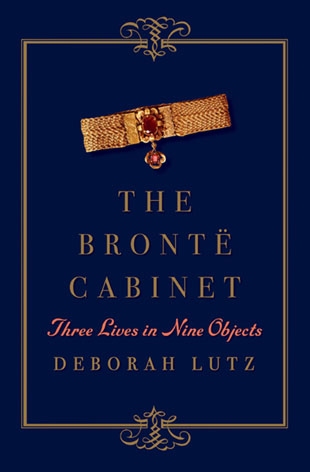
Deborah Lutz is a professor of English at Long Island University and has written widely about Victorian society. In the preface to this fascinating book titled "The Private Lives of Objects," she points out that in the 17th and 18th centuries, many Europeans believed that objects could channel the character, emotions, and desires of their owners long after their deaths. While some accepted what they saw as the muteness of things, others treated their most treasured objects with reverence. After all, an old watch or a worn-out dining room table carries the histories and the energies of ancestors we never knew but are connected to us.
Although the Brontë sisters were in many ways ordinary women and sisters, they lived in a parsonage and wrote their distinctive novels there. Fans of the fiction of Charlotte, Emily, and Anne will love this imaginative book which provides access to their lives and creations through nine objects: tiny books, peelers, a walking stick, a dog's collar, letters, a portable writing desk, a bracelet, an album, and various items that were considered relics after the sisters' deaths.
These adored and favorite possessions shed light on some of the aspects of 19th century culture in England, the peculiarities of the Brontë family life, and the special gifts and talents of the sisters. It is a lark to imagine how saturated with words these household artifacts must have been given their habit of reading to each other while doing chores.
We couldn't wait to read The Brontë Cabinet since it fits in with a series of other books about the role of objects, things, possessions, and artifacts in our lives. In a time when our technological toys are taking us away from the material world, we need to reverse that trend and reverence our things. This is a spiritual practice which the Victorians and the Brontë sisters would surely agree is worth our time, energy, and effort.