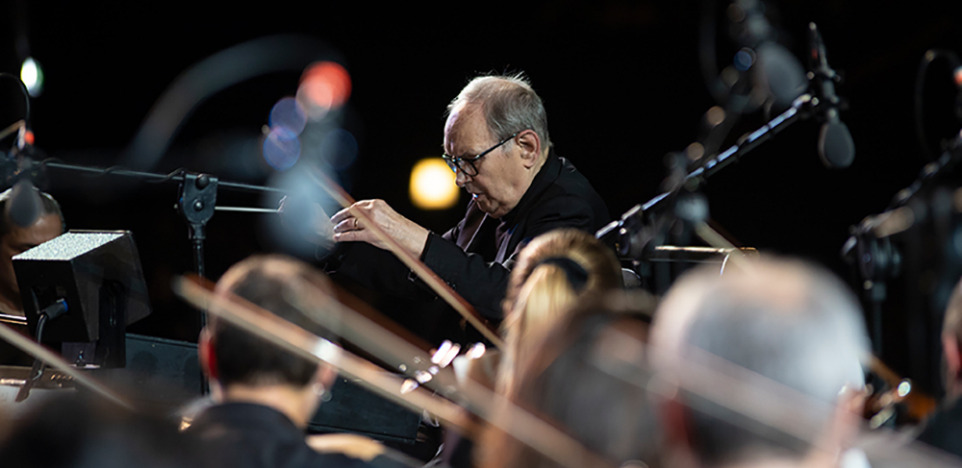
Director Giusepe Tornatore (Cinema Paradiso) worked for more than 25 years with Ennio Morricone (1928 – 2020), and this documentary is his tribute to a remarkable man and composer. He wanted to make his personal story known to the millions around the world who love his music written for the movies. He explains in a Director’s Note that “I structured Ennio as a show that through the clips of the films he sets to music, the archive images, the concerts, can lead the viewer into the
formidable existential and artistic parable of one of the most loved musicians of the twentieth century.”
Ennio Morricone is a major presence in the film, sitting at home and recalling how he came to write certain pieces. As a young man he played the trumpet, but he was most recognized for his film scores. He didn’t intend to spend his whole life writing cinema music, he explains, but that is what happened. He talks about his disappointment when he did not win an Academy Award for his score for The Mission; filmmaker David Putnam and composer John Williams agree that this was a huge mistake. But Ennio did win an Oscar later for The Hateful Eight as well as an Honorary Oscar for his life’s work.
His career had been jump-started when he wrote the score for Sergio Leone’s 1964 western A Fistful of Dollars. That collaboration continued through many films with the last one being Once Upon a Time in America in 1984. By that time, the role Ennio’s music played in actually telling a story was so valued that the soundtrack was played in the background as the actors, including Robert de Niro, went through their paces.
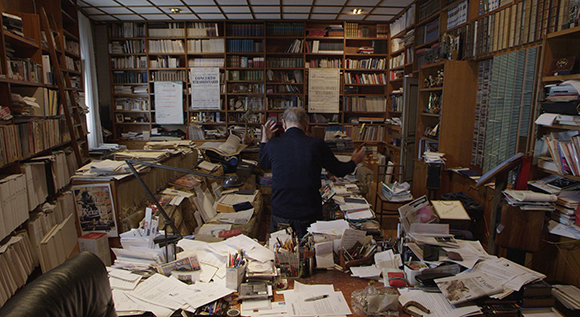
The documentary is packed with interviews by directors and musical artists such as Bernardo Bertolucci, Marco Bellocchio, Giuliano Montaldo, Dario Argento, Clint Eastwood, Joan Baez, Bruce Springsteen, and more. One after another assesses the impact of his work, convincing us that he was uniquely gifted. He composed over 500 film, music and concert works.
But perhaps the greatest testimony is provided by Ennio’s music itself, played over movie clips to illustrate how it enhances the cinema experience. Roland Joffe, director of The Mission, recounts how Ennio initially told him he could not write the music. But one night he called to say that he’d had an idea. That turned out to be “Gabriel’s Oboe” solo. Ennio then added a motet, sung by a full choir, and an indigenous song featuring drums. The three pieces are woven together over clips from the film for a truly stunning sequence.
If this is all you see of this documentary, it will convince you that Ennio Morricone was the greatest composer of cinema music of all time!