
I’ve been traveling quite a bit lately, and the frequent coming and going has surfaced an unexpected tension between home and away.
When I am away, I miss my own bed and my dogs, but I also feel a kind of ease. There is something about the way I move through hotels and friends’ houses that makes me feel unburdened, even as I am constantly having to pack and unpack, check in and out, and forage for strong wifi and strong coffee.
I enjoy a kind of freedom when I am away that I don’t enjoy when I am home, and at first, the reason was not obvious, and I could not say what I felt free of. As the departures and homecomings added up, though, I began to figure it out. And eventually I saw in my experience a kind of parable for United States democracy.
I am the only human that lives in my house, which means that I am the only sentient being capable of tidying up. When I rise in the morning, I brush and empty my robotic vacuum cleaner, set it down, and let it run. Then I grab a broom and sweep up areas where dog hair has accumulated in unsightly piles. All the while, the dogs eat their breakfast, patrol the yard, and settle in on the couch like they have already done a good day’s work.
Throughout the day (I work remotely) I notice chipped paint, I track pesky flies, I water plants, I do dishes, and I worry that the rats might find another way inside this winter.
There is always something in the house that needs my attention — in addition to my actual work for Spirituality & Practice — and because I (gratefully) own the house and am its only human, it is all mine to do.
And so at first I thought that what I was free from while traveling was the labor of cleaning and fixing. I’m no 1970s rock star – I don’t leave live goats or smashed drum kits behind me in hotel rooms – but I do enjoy not having to scrub or vacuum these spaces. I do enjoy leaving them as they are.
Still, freedom from labor didn’t explain the unburdened feeling of away. Neither did the unburdening come from the pleasure of staying in a spot-clean environment. I’m really not that particular.
The freedom came from the fact that, no matter what the environment looked like, it was not my responsibility, and it did not reflect on me.
I’m sure there were stains and chipped paint in some of my hotel rooms, but these problems barely registered: Their coming into being was not my fault, and their resolution was not my burden.
By contrast, at home everything that needs to be done but hasn’t been done yet falls to me and reflects back on my own life: it represents (if only to me) the limitations of my time, skills, and money; sometimes it reveals my carelessness in not implementing routines that would mitigate mess: brushing the dogs every day, folding laundry as soon as it dries.
That’s a lot to process daily as I move around my home making my living. Away relieves me of all these reminders.
So is that the parable about the U.S. democracy? That it is good to get away, even to a country with its own problems, because we are not responsible for those problems the way we are responsible for our own cracked, stained, rat-infested system? Is this a parable about jumping the ship of our state?
Well, no. In fact, there is no way to make a parable of the story I’ve told so far because there’s no responsible lesson that can be drawn. I know a lot of us are updating our passports, but away is not a responsible option. If we find ourselves choosing between home and away because home bears too much responsibility, we need to reign in our privilege.
Here now is the rest of the story:
A few weeks ago, I invited a family in my neighborhood to move in with me. They are three generations (father, daughter, and granddaughter) and a dog. My house is an 850-square-foot two-bedroom with a partially finished garage and one bathroom.
It now houses seven sentient beings learning to share eggs, cream, coffee, butter, couches, dog toys, water bowls, and (did I mention?) one bathroom.
And to my surprise the greatest impact for me has been that I feel less burdened.
When I rise in the morning, I don’t immediately pick up the vacuum cleaner or run to the corners to sweep the piles of hair. I still notice them — they are larger, three-dog piles now — but I have a totally different relationship to this whole mess.
Because it’s our mess now. The seven of us are in this together.
The cracks and chipped paint mean something different now, at least to me. The collections of dog hair remind me that the pups running around the house are mine and theirs. The coffee grounds spilled on the counter could be anyone’s, and I will wipe them up while the father is outside mending the fence.
Whatever goes wrong and needs fixing is no longer just my burden or responsibility. We share the mess. And I don’t know if I can find the words to say just why that changes everything, but it does. It is freeing to look around and see the problems and responsibilities of a we, not an I, a community not an individual.
In these last weeks, I have felt while at home some of the ease I felt being away. Except the feeling is not a result of escape or vacation. It’s the result of staying in place, sharing, shifting from the personal to the collective, and learning that, when I live in community, flaws and messes just hit different.
Is this a parable now? I think so.
American individualism and its corollaries in individual responsibility and the nuclear family can become an enormous limitation. In times of real crisis -- a time such as this -- they hold us back; we quickly become overburdened, feel powerless and retreat because problems like racism, war, climate change, and the dismantling of democracy are too large for personal effort, too much for any rugged individual or any one family.
But problems are never larger than communal effort. A crisis is no match for a well-organized community. And this is true for reasons both material and spiritual.
Isolated, we become dispirited; together we become inspired. We breathe better together.
We urge you to breathe with others in the next crucial weeks and months. Below are some ways to do that.
Small groups are an easy way to remind us we exist as part of a collective. The shared responsibility to facilitate and keep the conversation going reminds us how burdens are lightened in community.
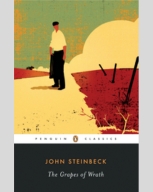 However, we encourage you to go further by making connection a theme of the group’s activity. You might convene in order to move and meditate together, or you might choose to read a book or watch a movie that promotes community effort over individual effort. The classic novel The Grapes of Wrath is a perfect example, and we offer a reading guide to help your group discuss its themes.
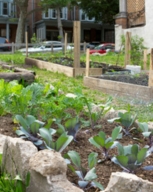 Even religious congregations can become overwhelmed because, as separate institutions, they isolate from the surrounding community. Reaching beyond your group’s membership and walls can help to overcome these limitations. Repurposing some of a congregation’s grounds for a community garden is a first step towards the liberation of community.
 Kirill Mikhanovsky’s film Give Me Liberty is a brilliant exploration of community forming amid chaos. In his review for S&P, Micah Bucey writes that “Give Me Liberty wants to throw its audience into the middle of the maelstrom in order to show us the bridges that can be built, even in the center of a storm.” He also notes that the film points to “a universal need to slow down, breathe together, extend help to those who need it, and ask for help from those who can give it.”
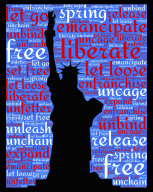 Any problems we retreat from now will fall to the next generation. Resist generational isolation and privilege by asking younger folks to express what democracy means to them.
- See more Spiritual Resources for the U.S. Election Year.
- To receive these weekly features in your inbox on Mondays, subscribe to the Practicing Democracy Project email list here.