
Are you feeling it? Things are starting to get tense.
The man ahead of me at the post office the other day was ranting about politics, and as he left, he yelled behind him, shaming the clerk for not speaking Spanish. She was rattled, and we both agreed: It was that time: the time everyone goes crazy.
Nonetheless, she was so kind to me. I needed tape for my return package. You’re supposed to buy it, but she snuck some from under the counter while her boss peered over to make sure she wasn’t offering the very generosity she was offering. It’s that time: the time when kindness is harder and means more.
On social media, even like-minded people, rigid with fear, are clawing at one another. It’s been years since I unfriended anyone, but I just did it, and then I decided to abstain from social media until after the election. Because it’s that time again: time to focus our energy, recognize our own limits, and prioritize mental health.
Before my social media break, I saw one final sign of the times, and I was so glad I did because it was the kind that let me know I am not alone, that my emotional state is a shared one, and that there are good reasons for what I am feeling. It was a Tik Tok video featuring a young woman in a dark room, wearing a hoodie and sunglasses. She laments straight on to the camera: “I can’t do this hurricane-election-inflation-diddler-wartime-dark-by-5pm-pumpkin-spice season. Ok? So, just — somebody tell Mariah we’re ready.”
As my friend says, “Life be lifing.” And we are feeling it, and we are ready for Mariah Carey already. We are ready for Mariah’s feel-good pop Christmas love songs.
We want an end to hurricane-election-inflation-diddler-wartime-dark-by-5pm-pumpkin-spice season. We yearn for all-the-lights-are-shining-so-brightly-everywhere-And-the-sound-of-children's-laughter-fills-the-air season. (Oh, oh, yeah).
I was so happy to see this lament on TikTok — because it is lament, and lament is helpful, and sometimes we are not very good at it.
To lament is to cry out. It is to describe suffering, weep at suffering, and ask how much longer until the suffering ends.
Lament can be private or public. The song you listen to in your bedroom — the one that has you squinting your eyes and clenching one fist as the other grips a hairbrush-microphone – that yearning carries some kind of lament.
So too, protests, encampments, and marches are lament — public, organized, collective forms of yearning.
Voting, too, can be a lament. Whatever we think of the Uncommitted National Movement, those Americans are expressing their lament over the United States’ complicity in the murder of Palestinians.
Lament is healthy. It is more than sadness or complaint. Because when we lament, we create more pathways to joy. When we lament we allow ourselves to be consoled, usually in the form of community (imagined, virtual, or embodied; human, animal, plant, or divine).
When I intentionally express my suffering and really push on it until I get to the rock-bottom level, what I invariably find is some condition that I share with millions if not billions of other organisms, and maybe with the planet and life itself.
I find connection and, in that, joy.
Listen, there’s plenty to be angry about. Instead of yelling at postal clerks, getting stingy with scotch tape, or arguing with our allies, let’s express it in healthy ways — through the art of lament.
 Jelaluddin Rumi offers this wonderful poem from the Sufi tradition, encouraging us to: Cry out! Don't be stolid and silent / with your pain. Lament! And let the milk / of Loving flow into you.”
 The mystical Catholic priest Edward Hays made a theology of lament part of his life’s work. He regretted that, in Christianity, hope sometimes overshadows mourning. “We must not,” he proclaimed, “under-estimate the profound effect of the zero gravity of grief in our lives.” Read “Wailing Psalm” to see his theology enacted.
 Megan McKenna offers this Christian prayer, asking Jesus to send tears that will “stir us to make ‘justice roll like a river’ for the children and those who come after us. . . .”
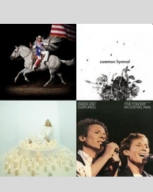 Listening to musicians that express strong emotions can be a way to access our own strong emotions, including lament. We put together a playlist titled “Lament, Resistance, and Joy” to help you process frustration, righteous anger, powerlessness, etc. and lead you into determination, hope, and transformation.
As you listen, stay open to new styles of music and expression. This is a radically intergenerational playlist! It reaches back to a spiritual sung by enslaved Africans in the 19th century; it jumps forward to a 2020 remake of Woody Guthrie’s 1944 “You Fascists Bound to lose”; and, starting with the 1960s, it stops at every decade up to the present.
Note: Four of the songs are labeled Explicit; use your discretion when playing aloud.
- See more Spiritual Resources for the U.S. Election Year.
- To receive these weekly features in your inbox on Mondays, subscribe to the Practicing Democracy Project email list here.