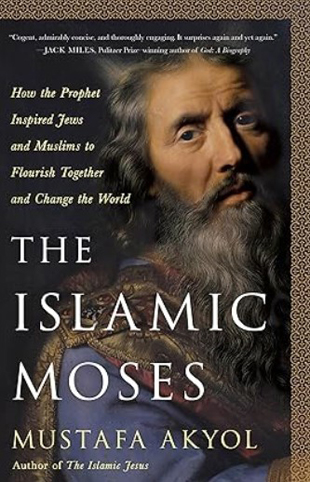
The author of this book is a senior fellow at the Cato Institute, lectures on religion at Boston College, and is a Muslim scholar with several books to his credit. This study deserves a wide reading.
Akyol discusses theology and history without being pedantic or intimidating. He is skilled at choosing the right example and scripture from a religious tradition to advance his thesis: the “Judeo-Islamic” tradition is rich in similar history and purpose. Too often “Judeo-Christian” is the assumed legacy of what remains from the triangle of the major Abrahamic religious traditions, but in many ways that Akyol makes clear, Jews and Muslims are meant to work together.
This is demonstrated in three early chapters devoted to the origins of Islam in the experiences of “the Moses of Mecca,” the Prophet Muhammad. In those early days, for instance, Akyol relates close parallels between the revelations in the Qur’an and those in early Judaism, as well as some notable examples of Jews who converted to the new faith: “For Muslims who were trying to prove the truth of their newborn faith to their fellow Arabs, this confirmation by Jews, the quintessential monotheists, was important.”
Later chapters include examining similarities between the traditions regarding food laws, ways of knowing and rationalism, and how each traversed the European enlightenment and modernity. Every chapter, including the ninth that’s devoted to the closing century of the Ottoman Empire, examines the mostly peaceful and cooperative relationships that existed between Jews and Muslims in Muslim-dominated communities.
A final afterword addresses the Hamas attacks of October 7, 2023, and the Israeli assault on Gaza that has followed as “the darkest hour” in the long, mostly fruitful history, between the two faiths. This might have been added unnecessarily onto the book at the last minute. Even if so, the author concludes, most helpfully: “Both Jews and Muslims can come together in the spirit of that great prophet in whose footsteps we have been walking: Moses. His legacy … included two separate liberations. First, in his actual life in ancient Egypt, Moses liberated Jews from oppression. Then, almost two millennia later, the mere story of Moses inspired the first Muslims of Mecca in their own liberation from oppression. Moses, in other words, is the symbol of liberty for both Jews and Muslims.”