It was late in the evening on the day of the assassination attempt on U.S. presidential candidate Donald Trump. I was feeling relieved. For the previous many years, Saturday nights meant sermon preparation, and late-breaking news meant rewriting whatever I had planned. I thought of all my clergy colleagues who were not so lucky and texted my friend Allan: “Thinking of you, preacher, given the day’s events.”
Allan texted back that he was not sure how to respond, if at all.
I showed up in the morning, and, sure enough, he had scrapped his whole talk and rewritten a new message that addressed the moment: the reality of political violence, the threats to democracy, the need for love to guide and connect us all.
At this church, after Allan speaks, the floor is open to discussion, and discussion is robust. This is a church led by deconstructed evangelicals, an open and intellectual space for everyone, but especially healing for those who grew up in a rigid faith they are trying to remake and live into.
Folks here respect Allan by disagreeing with him and, thus, pastor and congregation co-create the kind of space where everyone can question, explore, and belong.
One discussant, a young white female, was quite emotional in her disagreement. She expressed utter exasperation with people who feared democracy was at stake. She felt that everyone was overreacting, and she didn’t want to hear any more of what she considered conspiracy theories. “We’ve been a democracy for a long time,” she said, indicating that our democracy was too well established to be in danger.
I took in her words and wondered if I was a conspiracy theorist for worrying about Project 2025 or for taking seriously what was recently reported in The Economist: “A recent survey by Pew, a pollster, found that more than a quarter of Americans think that an autocracy — in which a leader can bypass Congress and the courts — would be a somewhat or very good form of government.”
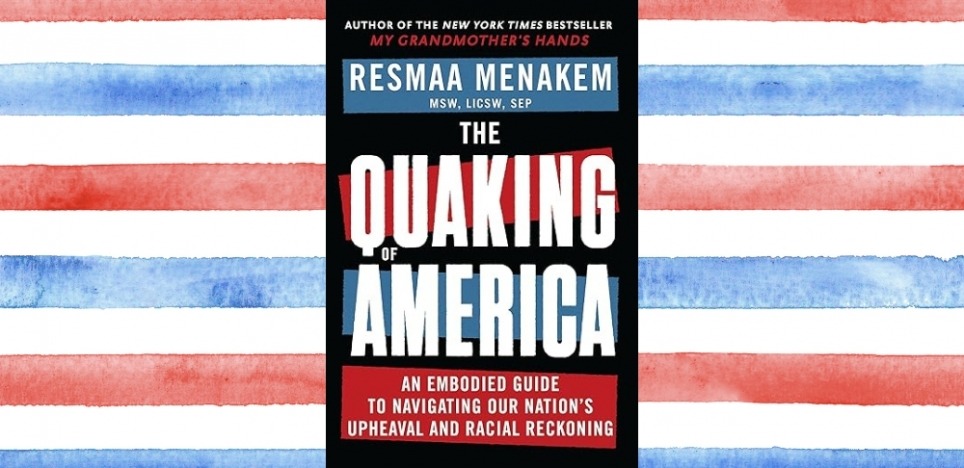
I was itching for the microphone but practicing restraint — and compassion, honestly, for someone who was, perhaps, numbed by privilege. I knew that, as soon as I spoke, I would basically be quoting from our review of Resmaa Menakem’s book on democracy. Menakem started writing the book when, after January 6, he realized that white bodies still felt immune to political violence:
“In the aftermath of this unprecedented, violent attack on democracy, Menakem expected to see some marked action from white bodies: mass sign-ups for self-defense courses or an uptick in gun sales. Neither happened. All evidence to the contrary, white bodies seemed to still feel safe, protected by White Body Supremacy, or WBS. . . .
“For Menakem, the side effects of WBS on white Americans had never been clearer: naivete, immaturity, blindness, spiritual bypassing. . .
“He worried that all American bodies, but white bodies especially, were ill-prepared for reality.
“And our reality, as Menakem urgently writes, is that The Quaking of America is already underway, and to survive it, we will need An Embodied Guide to Navigating Our Nation’s Upheaval and Racial Reckoning.”
The Quaking of America is indeed underway. I said so when I took the mic that Sunday, and I say so now, with this farther-reaching amplification.
We need practices that help us settle our bodies and ready them to access calm in chaos. One way to begin is to practice Metabolizing the Reckoning. This practice invites us to admit the circumstances we are in and take note of how our bodies respond to that recognition.
Another practice, What We Face, invites a similar practice using video of the January 6 riot as a point of focus for our confrontation with reality.
When you find yourself in a state of reactivity, try Breathe, Ground, and Resource, Revisited; 20’s; or Finger Balance.
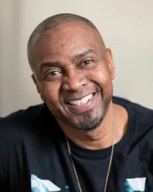 You can explore more of Menakem's wisdom, analysis, and body practices by visiting his Living Spiritual Teachers profile.
- See more Spiritual Resources for the U.S. Election Year.
- To receive these weekly features in your inbox on Mondays, subscribe to the Practicing Democracy Project email list here.