
One of the tasks of any political candidate is to tell the electorate their story. This task reminds me of the Protestant tradition of giving testimony: a church member stands up in front of the congregation and tells their story through the lens of Jesus’s transforming presence in their life.
In U.S. politics, the lens is democracy and, often, the American Dream. Candidates offer secular testimony to how their lives and the lives of their ancestors have been improved by the economic, social, and civic conditions protected by democratic norms and institutions.
Political parties produce different narratives, and like all stories, these secular testimonies have a beginning, middle, and end. Candidates build platforms and personalities by positioning themselves in relationship to the past, the present, and the future. Think of Donald Trump’s “Make America Great Again” and Kamala Harris’s “Never Going Back.”
As much as these are political narratives, they are only effective if candidates can convince voters that the stories are also personal — that “this is your story too.” Trump writes a nostalgic story that proposes everyone was better in the past than they are in the present. Harris writes a progressive story that envisions present gains advancing further so that everyone is better in the future.
Ironically, making these stories personal to an entire electorate makes them utterly generic. These are simple narratives — chant-able, invigorating for a convention or rally, but flat and uninteresting as personal stories.
Let’s fix that! Let’s use election season to write our own testimonies about life under the influence of democracy. This project can be as big or small as you like. Use the following questions for quiet reflections, mealtime discussions, or as prompts for a long writing project.
Here are some suggestions to get you started:
 Identify three democratic ideals or institutions that have affected you, your ancestors, and the younger generations. Do you feel you always had access to these ideals/institutions? Why or why not? How did your level of access to them shape your body, mind, emotions, and spirit? (Our chart of Democratic Values, Virtues, and Spiritual Practices might help you get started.)
What elements of democracy would you expand? What might you restrict?
What event most activated your sense of civic responsibility?
If you were to actually write your own story, would it be a memoir (individual), a genealogy (familial), or a sociological study (communal)? Why would you make this choice?
For further inspiration and guidance for your own project, we suggest watching What the Constitution Means to Me on Amazon Prime. In this filmed stage production, Heidi Schreck tells the story of how the Constitution shaped the lives of four generations of women in her family.
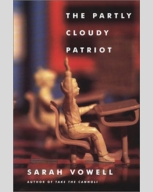 Further your reflections on how democracy shapes stories by exploring the We the People Book Club e-courses. We feature two centuries of brilliant American writers telling their own stories about the limitations and promises of democracy. We recommend starting with one of these: The Grapes of Wrath,The Underground Railroad, The Partly Cloudy Patriot, or The Fire Next Time and Between the World and Me.
- See more Spiritual Resources for the U.S. Election Year.
- To receive these weekly features in your inbox on Mondays, subscribe to the Practicing Democracy Project email list here.