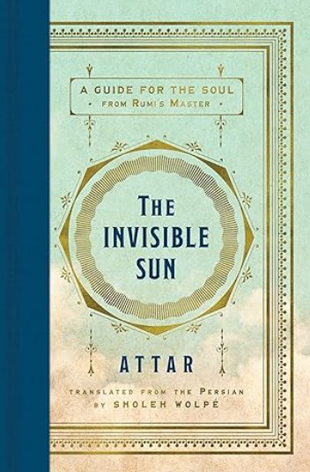
A gentle introduction of 7 ½ pages opens this book devoted to Attar — a twelfth- and thirteenth-century Persian (Iranian) herbalist, wisdom teacher, and poet who influenced someone more famous, Jelaluddin Rumi. You may also know Attar from his more famous work titled The Conference of the Birds. The same editor and translator of this one, Sholeh Wolpe, published a new edition of it back in 2017.
Wolpe is Iranian-born herself and brings a real sensitivity to these translations and the transmittal of this Sufi wisdom. Her opening sentences tell us what’s most essential: “The central idea in Sufism is that the soul, in the prison of the body, awaits release. Once freed, it returns to the Source, the Creator. However, you can experience this reunion while still bound in your physical form by looking inward and by purification.”
The rest of the introduction lays out what it means to be on the path, to stray from it, to return to it, and who this person Attar is. Wolpe also speaks personally: “Attar’s wisdom has changed my own life.” Then come the sampled poems.
They are at times anti-clerical:
“Free yourself of all preachers.
Animate your heart with your Creator.”
They are mystical:
“There is an invisible sun
hiding inside us all.
“One day the veil falls away
and that revealed sun shines,
“and in its radiant light
all virtues and corruption vanish.”
And they are consistently ethical:
“Be generous as the bountiful sea.
Be bighearted like the magnanimous sun.
Be modest as the humble earth.”
They will remind you of Rumi in their exuberance and delight in the Beloved and their talk of the restless and distracted heart, but it seems that Attar, who once bounced Rumi on his knee, also wrote often on the tainted soul, sin and repentance, and the danger of waiting too long before getting serious about what matters (see the excerpt accompanying this review).