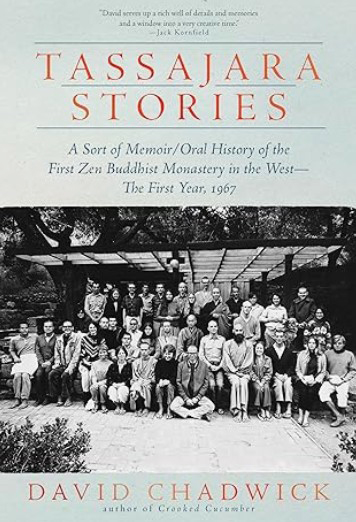
We have reviewed several of author David Chadwick’s books in the past and awarded Crooked Cucumber: The Life and Zen Teaching of Shunryu Suzuki as one of the “Best Spiritual Books of the Year” back in 1999.
For more than a quarter century, Chadwick has been the primary person carrying on the teaching of Shunryu Suzuki, the Japanese Sōtō Zen monk and teacher who helped to popularize Zen Buddhism in the United States more than any other single person and who authored what’s perhaps the most essential classic of Zen for the West: Zen Mind, Beginner’s Mind. Chadwick, now in his eighties, does this most of all at two websites he still runs and populates: cuke.com and shunryusuzuki.com. He’s also an active podcaster.
Now, Chadwick has also set out to tell Tassajara Stories about the first Zen monastery in the West, founded by Shunryu Suzuki and others in a mountain valley inland from the Big Sur coast of California. His book combines memoir (Chadwick was there), oral history, lively color and storytelling, and a documentarian’s attention to detail, as Chadwick tells stories that link like a chain from the first teachings of Suzuki in the Bay Area, to the gathering of a first small group of students, the eventual looking for land south of San Francisco where a Zen monastery might be built, and then the personalities and activities that filled the first year at what became known simply as Tassajara.
The subtitle indicates that these are the stories from Tassajara’s first year, 1967, but there is background, too, and the narrative vignettes that fill the book begin chronologically in the summer of 1964.
Famous Zen Buddhists are in these many anecdotes including the “other Suzuki,” known as D.T. Suzuki; another vitally important figure in disseminating Zen in the West, Alan Watts; the poet and ecologist Gary Snyder; Allen Ginsberg, and Richard Baker, who started as Shunryu Suzuki’s star pupil and then quickly became his Dharma heir. But more important to the narrative are all of the ordinary folk who peopled, worked, sat, and lived together at Tassajara. See the excerpt accompanying this review for a sample of these.
A handful of black-and-white photographs are present, including one at the back, which is a repeat of the cover photo with notation from the author to point out and name who all of those people are at the creative place of spiritual adventure called Tassajara in the fall of 1967.
Highly recommended.