
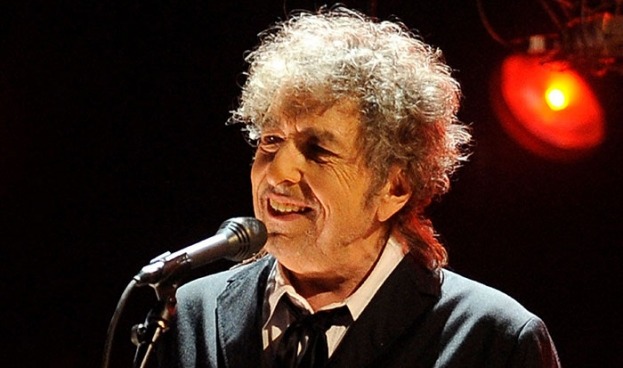
 Bob Dylan Awarded the Nobel Prize in Literature
Bob Dylan has always impressed us with the lyrics to his songs. From his beginnings as a folk singer in 1961, he mixed folk songs with protest ballads. Critics have been amazed by the different styles in Dylan's repertoire. In 1965, he adapted a rock style, followed by a turn to songs with Christian imagery, and most recently savored the pop style associated with Frank Sinatra.
 Posted by Frederic and Mary Ann Brussat on November 1, 2016
 Cyberwar Is Now Official
Posted by Frederic and Mary Ann Brussat on September 13, 2016
On June 14, 2016, NATO announced that it was designating cyberspace as an "operational domain" for war alongside land, sea, and air. Jens Stoltenberg told a press conference: "It means that we will coordinate and organize our efforts to protect against cyberattacks in a better and more efficient way."
Aviva Rutkin in an article on newscientist.com notes that in cyberwar the targets include not only government systems but also water supply, power, or telecommunications companies. Nations around the world are now gearing up for this opportunity to hack into the data systems of enemies and bring chaos to them.
 Robots Are Taking Over
 Posted by Frederic Brussat on August 11, 2016
We are entering a brave new era as robots are getting very good at handling a wide range of tasks that have historically been the domain of paid workers. Some experts have figured out that half of current jobs are in danger of being replaced. As a larger supply of workers competes for fewer jobs, wages will diminish and even dry up completely. "With less need for human labor and judgment," venture capitalist Vinod Khosla predicts, "labor will be devalued relative to capital and even more so relative to ideas and machine learning technology."
 The Art of Using a Book
Posted by Frederic Brussat on July 28, 2016
"Using a book, not reading it, makes us wise" is a motto from Geoffrey Whitney's Choice of Emblemes published in 1586. Reading it, I smile knowingly, thinking of my habit of nurturing a pragmatic relationship with books. There is something very pleasing about holding a book in your hands and diligently marking it up in a special way. Putting question marks on the margins or little check marks before sentences that will someday be added to our quotation database: these are examples of how I consciously try to make the most of the reading experience.
 You've Got a Rented Friend
Posted by Frederic Brussat on July 14, 2016
In Practice Random Acts of Kindness, Rabbi Harold S. Kushner observed:
"Being in a totally dark room can be frightening until we discover how little light we need to banish a roomful of darkness. The pain, the hopelessness of the world, may look insurmountable until we move to counter them with little deeds of kindness."
In an article from AFAR magazine, which has been excerpted by The Week, Chris Colin describes a cultural phenomenon in Japan: rent-a-friend. He sets the stage with a brief glimpse into the rampant anxiety, sense of loss, and widespread loneliness in this country that has been rocked by the Fukushima nuclear disaster, the shrinking of the population, the increase in suicides stemming from overwork, and the large numbers of elderly people with no one looking after them.
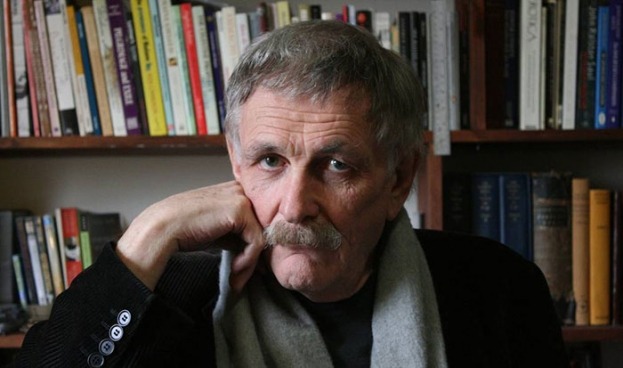 The Remarkable Cinematic Legacy of Australian Director Paul Cox
Posted by Frederic and Mary Ann Brussat on June 27, 2016
Paul Cox, one of Australia's finest and most sensitive film directors, died recently of liver cancer at the age of 76. He was often described as the father of independent cinema in Australia. Cox was born in 1940 in Holland but settled down in Melbourne during the 1960s.
Critic Roger Ebert called him "One of the Best Directors of Our Time," and we agree. His pensive dramas showed us ordinary people struggling with the large and unruly intangibles of love, loss, grief, sexuality, and imagination. In all of Cox's films and documentaries, there is a spiritual undertow that reflects his respect for the little movements of the soul in yearning, creativity, and memory.
 Art and Your Inner Spiritual Work
Posted by Frederic Brussat on June 6, 2016
On Huffingtonpost.com Mariano Lozano notes that throughout the ages, thinkers and philosophers have described human beings as political animals, toolmaking animals, playing animals, and calculative animals. Religion scholar Mircea Eliade took another route and posited that the archaic human was "homo religiosus" (the religious animal) because humans manipulate symbols so the sacred order of reality breaks through into ordinary reality.
 The Mystery of Awe
Posted by Frederic and Mary Ann Brussat on June 1, 2016
Jordan Rosenfeld in a nymag.com article reports on the explorations into the social and emotional functions of awe by psychologists. Jonathan Haidt and Dacher Keltner published a study of this form of self-transcendence in 2003 that linked it to feelings of connectedness and a willingness to help others. "The consequences of awe should be of interest to emotion researchers and to society in general," they wrote. "Awe-inducing events may be one of the fastest and most powerful methods of personal change and growth."
 The Patience to Bear Sorrow
Posted by Frederic Brussat on May 27, 2016
In these times, resilience is enjoying a great deal of support from scholars of psychology as a personal quality that enables people to bounce back from trauma and loss. But in an essay on aeon.co, Samira Thomas presents an alternate approach to suffering: patience.
She has worked with Afghan refugees in Canada, Pakistan, and Afghanistan itself; until the Syrian crisis, this country produced more refugees than any other place in the world for 32 years in a row. Thomas points out that the term resilience has its root in the Latin word resilientia, which means "to avoid or recoil." This behavior also carries a connection to strength of will.
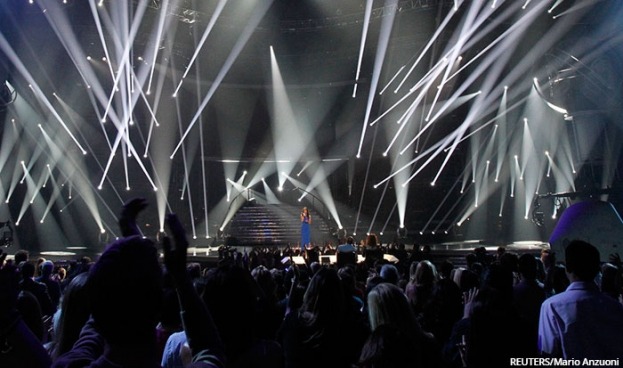 Mapping Culture through a TV Competition
Posted by Frederic Brussat on May 17, 2016
In a spunky article on theconversation.com, Katherine Meizel tallies up the impact of the American Idol TV show. She sees it as "a kind of guidebook for our entry into the 21st century." The show has run 15 seasons and reflects the widespread popularity of national myths of meritocracy from the rags-to-riches fairy tales of Horatio Alger to the American Dream.
RSS
About This Blog
Spiritual literacy is the ability to read the signs written in the texts of our own experiences. It is recommended and practiced in all the world's religions. Whether viewed as a gift from God or a skill to be cultivated, this facility enables us to discern and decipher a world full of meaning. More