
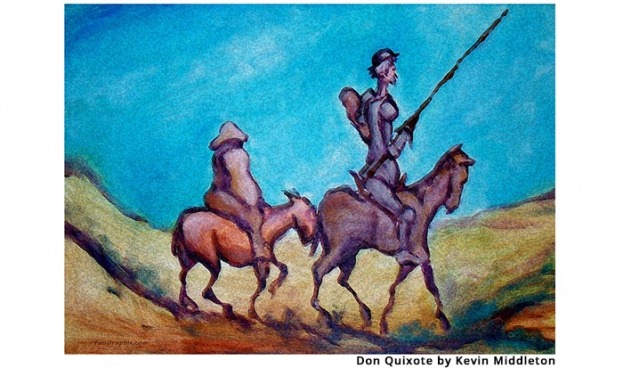
 An Elder Hero for the Ages
 Posted by Frederic Brussat on May 13, 2016
 Writer Milan Kundera is convinced that the modern era — and with it, the novel — began with The Adventures of Don Quixote by Miguel de Cervantes, which was published in 1605. It revolves around a delusional idealist, an elder who imagines himself to be a knight errant; he sees virgins in prostitutes and windmills as treacherous armies of giants.
 Truly Being Present
 Posted by Frederic and Mary Ann Brussat on May 4, 2016
It is not easy offering advice or what we deem as wise counsel to family, friends, clients, spiritual directees, or others who are suffering, baffled, or lost. For an OnBeing.org column, Parker Palmer writes about "The Gift of Presence, the Perils of Advice." He begins with several examples of well-doers who intend to help others but wind up doing more harm than good. Sadly, some of those who come to others' aid are there for the wrong reason — self-interest rather than selfless service.
Palmer cuts to the chase:
 The Problem with Inattention
Posted by Frederic and Mary Ann Brussat on April 28, 2016
For Aeon.co, Frank Furedi, a sociologist and social commentator, has written an illuminating essay revealing that the battle against inattention and distractions has been going on since 1710. He shows in a series of short takes that moralists, philosophers, educators, religious leaders, and medical professionals in Europe and elsewhere have long lauded attention as a source of enlightenment, an important mental faculty, and a sign of sound character.
Inattention, on the other hand, has been portrayed as a moral failing, a vice, a debilitating condition, and a threat to reason, progress, and prosperity. Furedi argues that all this upset was fueled by fear about inattention as a corrosive fire that could destroy established authority, social hierarchy, and the moral order. He concludes that the same is happening today as "the failure to inspire and capture the imagination of young people is blamed on the inattentive state of their minds."
The spiritual practice of attention is getting a complex and thought-provoking workout these days as more and more books are helping both youth and adults find imaginative ways to stem the tide of diversions and focus on things that matter. Stay tuned and make sure you are monitoring the tug-of-war over who is winning your attention on a day-by-day basis.
 Why We Enjoy Working So Hard
Posted by Frederic and Mary Ann Brussat on April 19, 2016
In The Economist, Ryan Avent writes: "My work – the work we lucky few well-paid professionals do every day, as we co-operate with talented people while solving complex, interesting problems – is fun. And I find that I can devote surprising quantities of time to it." Nearly a third of college-educated American men, for example, work more than 50 hours a week whereas elite lawyers with billable hours can easily work 70 hours almost every week of the year. And the work does not stop at the office:
"It follows us home on our smartphones, tugging at us during an evening out or in the middle of our children’s bedtime routines. It makes permanent use of valuable cognitive space, and chooses odd hours to pace through our thoughts, shoving aside whatever might have been there before. It colonises our personal relationships and uses them for its own ends. It becomes our lives if we are not careful. It becomes us."
 Make the Most of Your Sense of Touch
Posted by Frederic and Mary Ann Brussat on April 13, 2016
Touch has been seen down through the ages as the oldest and most urgent sense. When we reach out to others, it often creates bonds that words cannot equal. Touch also breaks down walls of isolation and opens doors to communion and true camaraderie.
In an enlightening feature for The Christian Century, Brian Doyle, the editor of Portland Magazine, takes a creative and caring look at a wedding and "the ways and means and manners by which people gently touch each other, and so communicate this and that and other things."
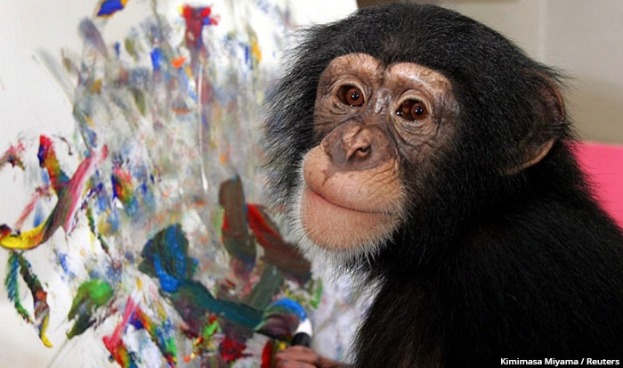 Observing Animal Spirituality
Posted by Frederic and Mary Ann Brussat on April 4, 2016
After working with chimpanzees for 55 years in Gombe, Tanzania, Jane Goodall says that some of their behavior is "perhaps triggered by feelings of awe and wonder" for magnificent natural features or events. She continues that chimpanzees are so similar to us, "Why wouldn't they also have feelings of some kind of spirituality?"
 Reconnecting with Nature through Ritual
Posted by Frederic and Mary Ann Brussat on March 30, 2016
Many people feel that they are slipping further and further away from their once powerful and meaningful connection with the natural world. Stephen Cave and Sarah Darwin in their essay "It's Not Easy Being Green" on aeon.co describe a shamanistic journey they took in the Museum of Natural History in Berlin. They hoped that this ritual would be able to turn them around so that they could "live within the bounds of the Earth's resources." But they later admit that "changing individual behavior to be more ecologically responsible is remarkably difficult." Perhaps that is the reason why so many people around the world are stuck in a rut as far as their pro-environmental activities are concerned.
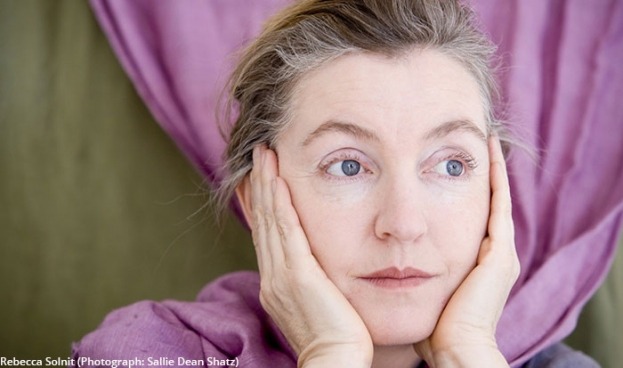 A Meditation on Hope and Despair
Posted by Frederic and Mary Ann Brussat on March 21, 2016
In brainpickings.org, Maria Popova presents a soulful meditation and affirmation of Rebecca Solnit's revised 2016 edition of her collection of essays titled Hope in the Dark: Untold Histories, Wild Possibilities. She uses this book as a chance to air her own ideas on hope, cynicism, and the stories we tell ourselves.
 The Broader Sharing Economy
Posted by Frederic and Mary Ann Brussat on March 9, 2016
In a thought-provoking article for Medium, Lily Cole and Adam Werbach describe how the term "sharing economy" has become the buzzword for Silicon Valley's most recent group of billion dollar companies including Uber and AirBnB. "Share" means "to divide one's own and give part to others" and describes the community-building ability "to distribute resources and sustain relationships." The authors are critical of using the word to describe something as limited and rigid as turning the production of goods and services into a market. They estimate that the real sharing economy consists of libraries, buses, roads and parks, courts, rummage sales, charity shops, gardens, and universities. The entire sharing economy may well be worth over $15 trillion in assets. This compares to the venture-backed enterprises that are worth about $130 billion.
 Unleashing America's Shadow
Posted by Frederic and Mary Ann Brussat on March 7, 2016
"With media complicity, Trump has unleashed the beast that has long resided not far from the American hearth, from those who started a Civil War to preserve the right to enslave a fellow human to the Know-Nothing mobs who burned Irish-Catholic churches out of fear of immigrants." This observation is from Timothy Egan's excellent article "The Beast Is Us" in The New York Times. The presumptive Republican presidential nominee stands for "hatred of immigrants, racial superiority, a sneering disregard of the basic civility that binds a society" and his supporters love him for "telling it like it is."
RSS
About This Blog
Spiritual literacy is the ability to read the signs written in the texts of our own experiences. It is recommended and practiced in all the world's religions. Whether viewed as a gift from God or a skill to be cultivated, this facility enables us to discern and decipher a world full of meaning. More