
On my left wrist I have a tattoo of a sentence from Marilynne Robinson’s 2004 novel Gilead. No one ever knows what it means, and the effort of explaining it kind of makes me regret ever getting it inked.
But all of that may change now that The New York Times has published its picks for “The 100 Best Books of the 21st Century.” Gilead is on there (#10), as are four other books that Spirituality & Practice featured as part of our Practicing Democracy Project’s We the People Book Club: The Underground Railroad (#7), Between the World and Me (#36), Tenth of December (#54), and The Sympathizer (#90).
(In fact, only one book that we chose from the 21st century did not make the list: The Partly Cloudy Patriot by Sarah Vowell. Vowell is very funny, and we stand behind our choice to include her!)
I prepared Reading Guides for each of these books, available as free downloads. (Click on the book titles to access the pdfs.) We encourage you to read these selections. They provide a private, reflective, restorative way to express your hope for democracy. To give you just a taste of each book, below are excerpts taken from the guides.
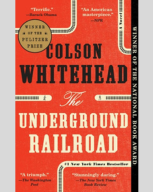 The Underground Railroad by Colson Whitehead:
“. . . [T]he underground railroad is an actual locomotive that runs in a tunnel. When Caesar and Cora emerge from the tunnel into the South Carolina sun, Cora ‘looked up at the skyscraper and reeled.’
“We reel, too. Skyscrapers and subways coexisting with slaves! The effect makes slavery seem much less remote, and from then on, this old genre of the slave narrative seems to speak to us of the present. The collapse of time affected by the simultaneity of slavery, its later effects, and modern technology makes the novel timeless … . It releases slavery from the deadening position of history and makes all its ghosts living, breathing, urgent realities.”
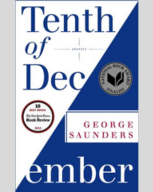 Tenth of December by George Saunders:
“George Saunders’ great gift, in the story collection Tenth of December, and in all of his work, is that even while he is being brutally honest about his characters’ darker sides, he writes them with so much genuine compassion and love that he can make you cringe and feel warmth almost simultaneously. We both laugh at and root for his characters. As Sarah Vowell (another We the People author) put it, Saunders ‘talks you into loving people.’ Now, that’s a service to democracy!”
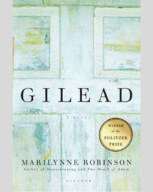 Gilead by Marilynne Robinson:
“. . . Gilead gives us the pleasure of meeting the Reverend John Ames of Gilead, Iowa . . . one of the great first-person narrative voices in American literature. His voice is the very diction and syntax of discernment and compassion.
“The Reverend’s sentences combine the elegant syntax of classical prose with the sensibilities of midwestern plain-speaking, ministerial humility, intellectual self-awareness, and American awe. The measured rhythm and reverent tone of his voice create an atmosphere that is, in a way, tacit instruction on how to read the novel: slowly, with great attention, stopping a while to savor a feeling, a thought, an image.”
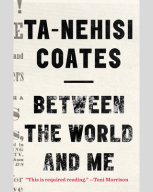 Between the World and Me by Ta-Nehisi Coates:
“In an operatic climax at the end of Between the World and Me, [Coates] concludes that the habit of plunder is truly an addiction, with all that word implies: obsessive use despite negative consequences. . . . ‘Something more fierce than Marcus Garvey is riding on the whirlwind. Something more awful than all our African ancestors is rising with the seas. The two phenomena are known to each other. It was the cotton that passed through our chained hands that inaugurated this age. It is the flight from us that sent them sprawling into the subdivided woods. And the methods of transport through these new subdivisions, across the sprawl, is the automobile, the noose around the neck of the earth, and ultimately, the Dreamers themselves.’ ” (The guide presents both Between the World and Me and James Baldwin’s The Fire Next Time.)
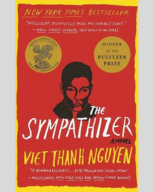 The Sympathizer by Viet Than Nguyen
“The novel follows the precarious life of an unnamed Captain in the South Vietnamese secret police who is actually a mole, a spy working for the North Vietnamese Communists. As Saigon is falling, the Captain gets orders from another agent, his best friend Man, to accompany the General as he, his family, and close associates flee to the United States. His task is to stay close to the General and other refugees in whose hearts the war is not over and report on any plans to mount a resistance. . . .
“Nguyen’s language moves up and down the registers: often he is the biting social critic; sometimes he is soft, vulnerable, even sentimental. You will find a penetrating analysis of the refugee experience followed by laugh-out-loud one-liners. The word that most characterizes his narrative style, though, is playful: he relishes a good metaphor and pushes language to its limit. The pleasure he takes in writing, and especially in inventing new ways to say and see things, is unmistakable.”
In addition to the works I already mentioned, the We the People Book Club presented free Reading Guides on
The Grapes of Wrath by John Steinbeck
A Good Man Is Hard to Find by Flannery O'Connor
Selected Poems of Walt Whitman and Maya Angelou
Pudd'nhead Wilson by Mark Twain
Ceremony by Leslie Marmon Silko
Their Eyes Were Watching God by Zora Neale Hurston
 The We the People Book Club was offered as an e-course from September 2018 - August 2019. This 52-week program is now available to schedule at your own pace or we can create a custom group for you. You can also access the following modules as individual e-courses:
Exploring The Grapes of Wrath
Exploring The Underground Railroad
Exploring A Good Man Is Hard to Find
Exploring Selected Poems of Walt Whitman and Maya Angelou
Exploring Tenth of December
Exploring Gilead
Exploring Pudd'nhead Wilson
Exploring The Fire Next Time and Between the World and Me
Exploring Ceremony
Exploring The Sympathizer
Exploring The Partly Cloudy Patriot
Exploring Their Eyes Were Watching God
- See more Spiritual Resources for the U.S. Election Year.
- To receive these weekly features in your inbox on Mondays, subscribe to the Practicing Democracy Project email list here.